Product Description
Product Description
Raw Material
Company Profile
Packaging & Shipping
FAQ
1.Production Lead Time:
1. High Season (September to April): 30-40 days .
2. Low Season (May to August): around 18-25 days .
3. We will come up with a detailed production schedule for each order and this schedule will be a platform for onward communication between customers and us.
2.payment item:
1. 30% down payment before production and balance before shipment.
2. We can offer different pricing of FOB, CIF and C&F.
3. Cash, Ali Express Escrow, Paypal, West Union, Money Gram, Bank Transfer and L/C are all available.
| Material: | Aluminum |
|---|---|
| Frame Material: | Metal |
| Style: | European |
| Type: | Combination |
| Usage: | Balcony/Garden/Outdoor |
| Folded: | Unfolded |
| Customization: |
Available
|
|
|---|
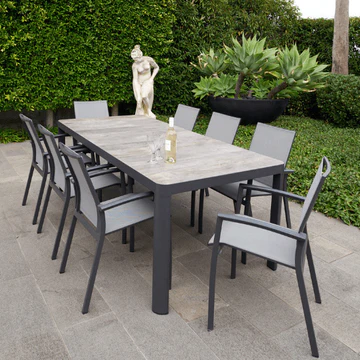
What are the best practices for assembling and maintaining outdoor furniture with glass tops?
Assembling and maintaining outdoor furniture with glass tops requires careful attention to ensure proper installation and long-term durability. Here are some best practices to consider:
1. Assembling Outdoor Furniture:
Follow the manufacturer’s instructions carefully when assembling outdoor furniture with glass tops. Ensure that all parts are correctly aligned and securely fastened to prevent any instability or accidents.
2. Handle with Care:
When handling glass tops, wear protective gloves and take care to avoid dropping or banging them against hard surfaces. Glass can be fragile, so handle it with caution to prevent cracks or damage.
3. Use Protective Pads or Cushions:
Place protective pads or cushions between the glass top and the frame to prevent direct contact and reduce the risk of scratches or chipping. These pads also help provide stability and prevent the glass from sliding or shifting.
4. Avoid Excessive Weight or Pressure:
Avoid placing excessive weight or applying strong pressure on the glass top. Glass can be susceptible to breaking or cracking under heavy loads or impact. Use caution when placing objects on the surface and avoid sitting or standing on the glass top.
5. Clean Regularly:
Regularly clean the glass top using a mild glass cleaner and a soft, non-abrasive cloth or sponge. Avoid using harsh chemicals or abrasive materials that can scratch or damage the glass. Wipe away any spills or debris promptly to prevent staining.
6. Protect from Extreme Temperatures:
Avoid exposing outdoor furniture with glass tops to extreme temperature changes. Sudden temperature variations can cause the glass to expand or contract, leading to potential cracking or breakage. Consider using protective covers or moving the furniture to a shaded area during extreme weather conditions.
7. Inspect for Damage:
Regularly inspect the glass top for any signs of damage, such as cracks, chips, or loose fittings. If you notice any issues, address them promptly. Repair or replace the glass as necessary to maintain the integrity and safety of the furniture.
8. Store During Winter or Inclement Weather:
If possible, store outdoor furniture with glass tops indoors or in a covered area during the winter or periods of inclement weather. This protects the glass from potential damage caused by freezing temperatures, snow, or heavy rain.
9. Follow Safety Guidelines:
Adhere to safety guidelines provided by the manufacturer and any local regulations regarding the use and maintenance of outdoor furniture with glass tops. These guidelines may include weight restrictions, recommended cleaning methods, or other specific instructions to ensure safe and proper use.
By following these best practices, you can assemble and maintain outdoor furniture with glass tops effectively, promoting longevity and enjoyment of your outdoor living space.
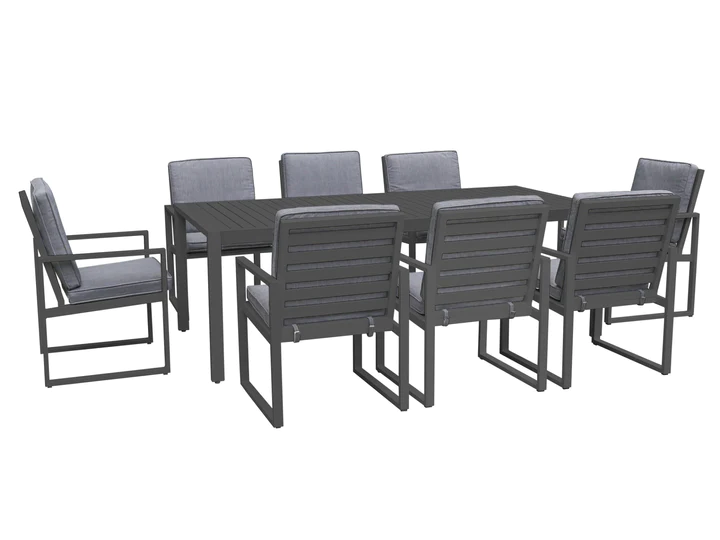
Can outdoor furniture be painted or refinished to give it a new look?
Yes, outdoor furniture can often be painted or refinished to give it a fresh and new look. Whether your furniture is made of wood, metal, or plastic, there are various techniques and products available to help you transform its appearance. Here’s what you need to know:
1. Wood Furniture: Wood furniture can be painted or stained to change its color or enhance its natural beauty. Before refinishing, it’s important to clean the furniture thoroughly and sand it to create a smooth surface. If you want to change the color, apply a suitable outdoor paint or stain that is specifically designed for exterior use and can withstand the elements.
2. Metal Furniture: Metal furniture can be painted to update its look or provide a protective coating. Start by cleaning the furniture to remove any dirt, rust, or peeling paint. Apply a primer designed for metal surfaces to improve paint adhesion, followed by an outdoor paint formulated for metal. Consider using spray paint for a smoother and more even finish.
3. Plastic Furniture: While painting plastic furniture can be challenging, it is possible with the right preparation and paint. Clean the furniture thoroughly and use a fine-grit sandpaper to roughen the surface slightly, allowing the paint to adhere better. Apply a primer specifically designed for plastic surfaces, followed by an outdoor paint suitable for plastic. Look for paints that offer good adhesion and durability.
4. Wicker Furniture: Wicker furniture can be refreshed by repainting or refinishing. Start by cleaning the furniture and removing any loose or damaged fibers. Use a brush or spray paint to apply an outdoor paint or stain suitable for wicker. Apply multiple thin coats for better coverage and durability.
5. Cushions and Fabrics: If your outdoor furniture has cushions or fabric components, you can also update their look by recovering or replacing them. Look for outdoor fabrics that are designed to withstand sun exposure and resist water and stains. Consider using weather-resistant cushions or adding waterproof covers to protect them from the elements.
Before painting or refinishing your outdoor furniture, it’s crucial to consider the specific material, condition, and intended use of the furniture. Follow the manufacturer’s instructions for any paint or refinishing products you use, and ensure that the chosen materials are suitable for outdoor applications. Proper surface preparation and regular maintenance will help extend the life and appearance of your newly refinished outdoor furniture.

Where can I find affordable outdoor furniture sets for my patio or deck?
If you’re looking for affordable outdoor furniture sets for your patio or deck, there are several places where you can find good deals. Here are some options to consider:
1. Online Retailers: Online retailers offer a wide range of options and often provide competitive prices. Websites such as Amazon, Wayfair, Overstock, and Walmart have dedicated sections for outdoor furniture where you can find affordable sets. Take advantage of online sales, discounts, and customer reviews to make informed purchasing decisions.
2. Local Furniture Stores: Check your local furniture stores or home improvement stores for outdoor furniture sales and clearance events. These stores often offer seasonal discounts or promotions, especially during the off-season. Visiting physical stores allows you to see and test the furniture in person before making a purchase.
3. Discount Stores: Discount stores, such as IKEA, Target, or Big Lots, frequently offer affordable outdoor furniture sets. These stores often have budget-friendly options without compromising on quality. Keep an eye on their outdoor furniture sections or sign up for their newsletters to stay informed about sales and special offers.
4. Secondhand Marketplaces: Consider exploring secondhand marketplaces like Craigslist, Facebook Marketplace, or local classified ads. Many people sell their used outdoor furniture at affordable prices, and you may find great deals on sets that are still in good condition. Be sure to inspect the furniture carefully and negotiate the price if necessary.
5. Garage Sales and Estate Sales: Garage sales and estate sales can be treasure troves for finding affordable outdoor furniture. Keep an eye out for local listings or signs in your neighborhood. While the selection may vary, you might stumble upon high-quality furniture sets at significantly discounted prices.
6. Outdoor Furniture Outlets: Outdoor furniture outlets or clearance centers often offer discounted prices on last season’s models or discontinued items. These outlets can be a great option for finding affordable outdoor furniture sets that still meet your needs and preferences.
Remember to compare prices, quality, and reviews before making a purchase. Additionally, consider the durability, materials, and maintenance requirements of the furniture to ensure you’re getting a good value for your money.
editor by CX 2023-12-04
China Best Sales Modern Outdoor Garden Home Hotel Resort Patio Villa CHINAMFG Fabric Corner Leisure Sofa Lounge Furniture vacuum pump ac
Product Description
HangZhou aobei aob outdoor furniture
Modern Outdoor Garden Home Hotel Reosrt Patio Villa CHINAMFG Fabric Corner Leisure Sofa Lounge Furniture
Similar Product Details Reference
HangZhou XIHU (WEST LAKE) DIS. AOBEI FURNITURE CO., LIMITED provides professional and comprehensive production to outdoor furniture with different designs and materials. We accept OEM and CUSTOMIZED orders, aiming to provide good service and good quality outdoor furniture for different commercial projects and wholesale business.
Our Advantages:
1) Professional OEM & CUSTOMIZED production.
2) Rich manufacturing experience since 2006.
3) Provide comprehensive production with different designs and materials.
4) Accept flexible order quantity.
5) Commercial standard quality with 3-5 years guarantee.
6) Provide high resolution photo & video.
7) Provide order production follow-up status in the whole process
8) All complains will be handled within 1-3 days.
9) Sample time 7-15days.
Our aim is to make you feel like you are an owned-manager and close partner with us.
We hope you have a minute to have a look at our e-catalog and website, where you can see a wide range of our products.
Also, we welcome a personal visit to our factory and showroom, which would allow us to show our products and answer your queries directly.
Please feel free to contact us anytime, thank you!
| Material: | Aluminum+Fabric |
|---|---|
| Frame Material: | Aluminum |
| Style: | Modern |
| Type: | Combination |
| Usage: | Bar, Cafe, Restaurant, Hotel, Resort, Villa, Home,Patio, Balcony,Seaside |
| Folded: | Unfolded |
| Customization: |
Available
|
|
|---|
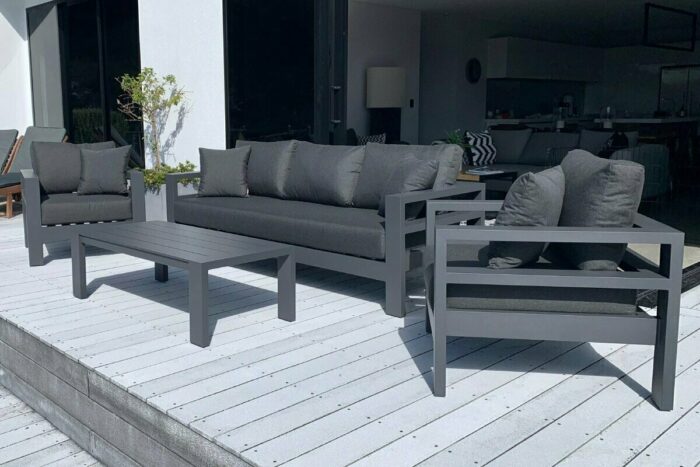
Are there any creative ways to arrange aluminum furniture for various room layouts?
Arranging aluminum furniture in creative ways can enhance the aesthetics and functionality of different room layouts. Here are some ideas to consider:
1. Open and Spacious Layout:
In an open and spacious room, consider creating distinct zones using aluminum furniture. For example, use an aluminum dining table and chairs to define the dining area, and place a stylish aluminum lounge set in a separate seating zone. This arrangement not only maximizes the use of space but also creates a visually appealing division between different functional areas.
2. Small and Compact Spaces:
In small rooms, opt for compact and lightweight aluminum furniture that doesn’t overwhelm the space. Consider multi-purpose pieces such as aluminum folding chairs or nesting tables that can be easily stored when not in use. Use the vertical space by incorporating wall-mounted shelves or hanging planters to add storage and decorative elements without taking up valuable floor space.
3. Corner Placement:
If you have an unused corner in a room, utilize it by placing an aluminum accent chair or a small side table. This arrangement not only maximizes the available space but also adds a functional and visually appealing element to the corner. Consider adding a floor lamp or a tall potted plant to further enhance the corner arrangement.
4. Conversation Areas:
Create cozy conversation areas by arranging aluminum furniture in a circular or semi-circular grouping. Place a round aluminum coffee table at the center and surround it with aluminum armchairs or loveseats. This arrangement encourages social interaction and provides a comfortable setting for conversations. Add cushions or throw pillows to enhance comfort and style.
5. Focal Point Emphasis:
Arrange your aluminum furniture to highlight a focal point in the room. For example, position an aluminum sofa or sectional facing a fireplace, a large window with a scenic view, or a wall-mounted TV. This arrangement draws attention to the focal point and creates a balanced and visually appealing layout.
6. Floating Furniture:
In rooms with ample floor space, consider “floating” your aluminum furniture away from walls. This technique involves placing furniture away from the walls, leaving some open space behind the furniture. It creates a sense of airiness and flow in the room. Use aluminum console tables or open shelving units behind sofas or against walls to add functionality and visual interest.
7. Symmetrical Arrangements:
For a formal and balanced look, arrange your aluminum furniture symmetrically. Place identical aluminum chairs or side tables on either side of a central focal point, such as a fireplace or a large window. This arrangement creates a sense of harmony and order in the room.
8. Mixing Aluminum with Other Materials:
Experiment with mixing aluminum furniture with pieces made from other materials for an eclectic and visually interesting effect. For instance, pair an aluminum dining table with wooden chairs or combine an aluminum coffee table with a fabric-upholstered sofa. This combination adds texture, contrast, and personality to the room.
Remember to consider the flow of the room, the functionality of the furniture, and the overall aesthetic when arranging aluminum furniture. Play with different layouts, experiment with accessories, and trust your creativity to find the arrangement that best suits your room and personal style.
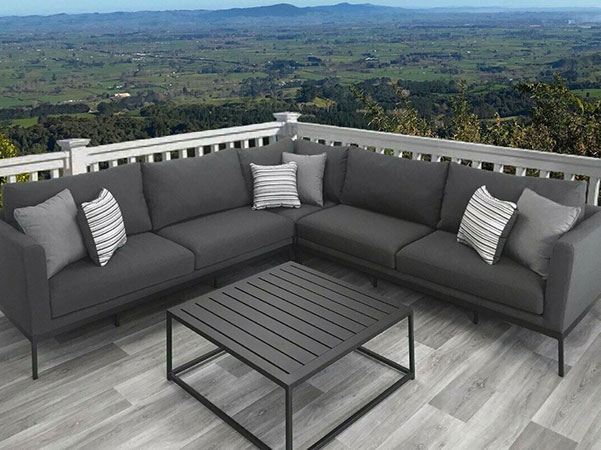
How do I secure aluminum furniture to prevent it from tipping over or moving?
Securing aluminum furniture is important to ensure safety and prevent accidents, especially in situations where the furniture may be prone to tipping over or moving. Here are some methods to help secure aluminum furniture:
1. Anchoring to the Ground:
If you have aluminum furniture placed in an outdoor area, such as a patio or garden, anchoring it to the ground can provide stability. Use ground anchors or stakes to secure the furniture legs or base to the ground. This method is particularly useful in windy conditions or areas prone to movement, preventing the furniture from being displaced or tipped over.
2. Weighted Bases or Sandbags:
For lightweight aluminum furniture, using weighted bases or sandbags can help stabilize the pieces. Place the weighted bases or sandbags on the furniture’s base or legs to add extra weight and prevent tipping. This method is especially effective for umbrellas, outdoor dining tables, or freestanding aluminum structures like screens or privacy panels.
3. Anti-Tip Devices:
Anti-tip devices are specifically designed to prevent furniture from tipping over. These devices typically consist of brackets or straps that attach the furniture to a wall or another stable surface. When using anti-tip devices with aluminum furniture, ensure that the fasteners are compatible with the material and securely anchor the furniture to the wall or surface.
4. Velcro Strips or Non-Slip Pads:
To prevent aluminum furniture from sliding or moving on smooth surfaces, consider using velcro strips or non-slip pads. Attach the velcro strips or pads to the furniture’s legs or base and adhere them to the floor or surface. This method provides friction and stability, keeping the furniture in place and reducing the risk of accidental movement or tipping.
5. Proper Weight Distribution:
When arranging aluminum furniture, ensure that the weight is evenly distributed. Avoid placing heavy objects or individuals on one side of the furniture, as it can create an imbalance and increase the risk of tipping. Distribute weight evenly across the furniture and encourage users to sit or place objects in a balanced manner.
6. Floor Grippers or Rubber Feet:
Consider using floor grippers or rubber feet on the bottom of aluminum furniture legs. These attachments can provide traction and prevent the furniture from sliding or scratching the floor. They also add stability and reduce the chances of the furniture tipping over.
7. Follow Manufacturer’s Guidelines:
Always refer to the manufacturer’s guidelines and recommendations for securing aluminum furniture. Manufacturers may provide specific instructions or additional accessories designed to enhance the stability and safety of their furniture. Adhering to these guidelines ensures proper use and minimizes the risk of accidents.
Remember that the specific securing method may vary depending on the type and design of the aluminum furniture. It’s essential to assess the individual furniture pieces and their environment to determine the most suitable method for securing them effectively.
By implementing these methods, you can secure your aluminum furniture and minimize the risk of tipping over or moving. Prioritizing safety measures ensures a stable and secure environment for you, your family, and your guests.

How can I maintain and care for my aluminum furniture to keep it looking new?
Maintaining and caring for your aluminum furniture properly can help keep it looking new and extend its lifespan. Here are some tips to consider:
- Regular Cleaning: Regularly clean your aluminum furniture to remove dirt, dust, and other debris. Use a mild soap or detergent mixed with water and a soft cloth or sponge. Gently scrub the surfaces, including the frames and any fabric or cushions, if applicable. Rinse thoroughly with clean water and allow it to dry completely.
- Avoid Harsh Cleaners: Avoid using abrasive cleaners, harsh chemicals, or solvents on your aluminum furniture, as they can damage the finish or surface. Stick to mild cleaning solutions or those specifically recommended by the manufacturer.
- Protective Covers: If your aluminum furniture is outdoors, consider using protective covers when it’s not in use. Covers can help shield the furniture from direct sunlight, rain, and other environmental elements, reducing the risk of fading, corrosion, or damage.
- Inspect for Damage: Regularly inspect your aluminum furniture for any signs of damage, such as loose joints, dents, or scratches. Address any issues promptly to prevent further damage or deterioration. Tighten loose screws or bolts, and consider using touch-up paint or clear coat to repair minor scratches or chips.
- Apply Protective Coatings: Some aluminum furniture comes with a protective coating or finish. If your furniture lacks this coating or if it has worn off over time, consider applying a suitable protective coating. This can help enhance the durability and resistance of the furniture to environmental factors.
- Store During Extreme Weather: In regions with severe weather conditions, such as heavy snowfall or strong winds, it’s advisable to store your aluminum furniture indoors or in a covered area during those periods. This can help prevent potential damage caused by extreme weather.
- Follow Manufacturer’s Guidelines: Always refer to the manufacturer’s care and maintenance instructions specific to your aluminum furniture. Different finishes or designs may have varying requirements, so it’s essential to follow the recommended guidelines for cleaning, maintenance, and any necessary treatments.
By following these maintenance and care tips, you can help preserve the appearance and longevity of your aluminum furniture, keeping it looking new and ensuring years of enjoyment.
editor by CX 2023-12-04
China supplier Modern Outdoor Garden Home Hotel Resort Patio Villa CHINAMFG Fabric Corner Leisure Sofa Lounge Furniture with Good quality
Product Description
HangZhou aobei aob outdoor furniture
Modern Outdoor Garden Home Hotel Reosrt Patio Villa CHINAMFG Fabric Corner Leisure Sofa Lounge Furniture
Similar Product Details Reference
HangZhou XIHU (WEST LAKE) DIS. AOBEI FURNITURE CO., LIMITED provides professional and comprehensive production to outdoor furniture with different designs and materials. We accept OEM and CUSTOMIZED orders, aiming to provide good service and good quality outdoor furniture for different commercial projects and wholesale business.
Our Advantages:
1) Professional OEM & CUSTOMIZED production.
2) Rich manufacturing experience since 2006.
3) Provide comprehensive production with different designs and materials.
4) Accept flexible order quantity.
5) Commercial standard quality with 3-5 years guarantee.
6) Provide high resolution photo & video.
7) Provide order production follow-up status in the whole process
8) All complains will be handled within 1-3 days.
9) Sample time 7-15days.
Our aim is to make you feel like you are an owned-manager and close partner with us.
We hope you have a minute to have a look at our e-catalog and website, where you can see a wide range of our products.
Also, we welcome a personal visit to our factory and showroom, which would allow us to show our products and answer your queries directly.
Please feel free to contact us anytime, thank you!
| Material: | Aluminum+Fabric |
|---|---|
| Frame Material: | Aluminum |
| Style: | Modern |
| Type: | Combination |
| Usage: | Bar, Cafe, Restaurant, Hotel, Resort, Villa, Home,Patio, Balcony,Seaside |
| Folded: | Unfolded |
| Customization: |
Available
|
|
|---|
How can I maintain and care for aluminum furniture parts to extend their lifespan?
To extend the lifespan of aluminum furniture parts, proper maintenance and care are essential. Here is a detailed explanation of how you can maintain and care for aluminum furniture parts:
- 1. Regular Cleaning:
- 2. Avoid Harsh Chemicals:
- 3. Protect from Scratches:
- 4. Apply a Protective Finish:
- 5. Address Corrosion Promptly:
- 6. Store Properly:
- 7. Inspect and Tighten:
- 8. Follow Manufacturer’s Guidelines:
Regularly clean aluminum furniture parts to remove dirt, dust, and debris. Use a mild soap or detergent mixed with water and a soft cloth or sponge to gently scrub the surface. Avoid using abrasive cleaners or tools that can scratch the aluminum. Rinse thoroughly with clean water and dry the parts completely to prevent water spots.
Avoid using harsh chemicals or solvents on aluminum furniture parts as they can damage the surface finish. This includes cleaners containing ammonia, bleach, or acidic substances. Instead, opt for mild and non-abrasive cleaning solutions specifically designed for aluminum surfaces.
Prevent scratches on aluminum furniture parts by using coasters, placemats, or felt pads under objects that may cause friction or abrasion. Avoid dragging heavy or sharp objects directly on the surface. This helps preserve the appearance and integrity of the aluminum.
If your aluminum furniture parts have a painted or powder-coated finish, periodically inspect the finish for any signs of wear or damage. If necessary, touch up or recoat the finish to provide an additional layer of protection against environmental elements.
If you notice any signs of corrosion or oxidation on aluminum furniture parts, address it promptly to prevent further damage. Use a gentle cleaner specifically formulated for removing oxidation and follow the manufacturer’s instructions. After cleaning, rinse and dry the parts thoroughly.
During periods of non-use or inclement weather, store aluminum furniture parts in a dry and covered area. This helps protect them from moisture, extreme temperatures, and prolonged exposure to sunlight, which can cause fading or discoloration.
Regularly inspect the hardware, joints, and connections of your aluminum furniture parts. Check for any loose screws, bolts, or fasteners and tighten them as needed. This ensures structural stability and prevents further damage or wear.
Refer to the manufacturer’s guidelines or care instructions specific to your aluminum furniture parts. They may provide additional recommendations or precautions based on the particular finish or coating applied to the aluminum.
By following these maintenance practices, you can extend the lifespan of your aluminum furniture parts and keep them looking their best. Proper care helps preserve the appearance, functionality, and structural integrity of the parts, ensuring that you can enjoy them for years to come.
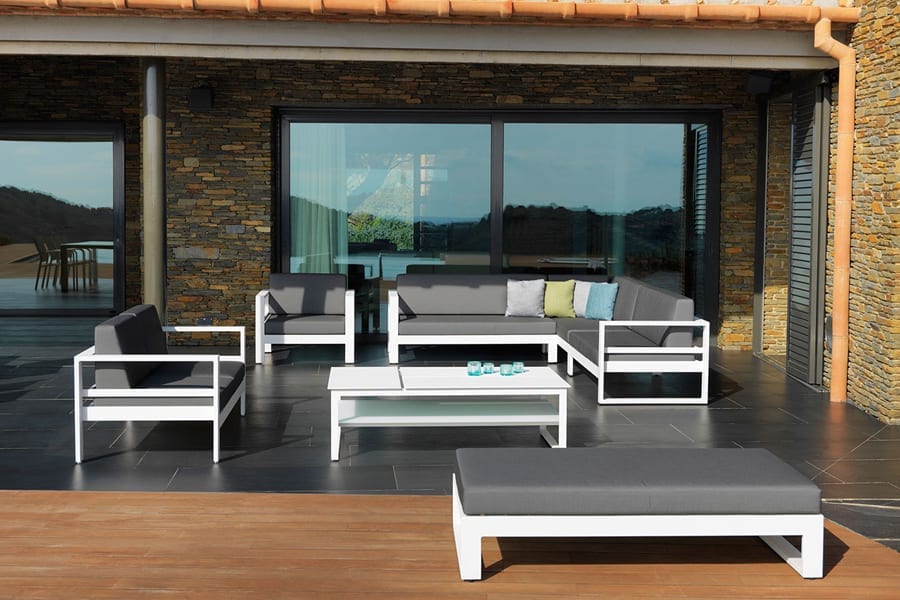
What are the benefits of using powder-coated aluminum for furniture parts?
Using powder-coated aluminum for furniture parts offers several benefits. Here is a detailed explanation:
1. Enhanced Durability: Powder coating is a highly durable finish that creates a protective layer on the surface of aluminum parts. This coating helps to resist scratches, chips, and corrosion, extending the lifespan of the furniture parts. The durability of powder-coated aluminum makes it suitable for both indoor and outdoor furniture, as it can withstand various environmental conditions.
2. Wide Range of Colors and Finishes: Powder coating provides a wide variety of color options and finishes for aluminum furniture parts. The powder coating process involves the application of dry powder to the aluminum surface, which is then cured under heat. This allows for a vast selection of colors, including metallic, glossy, matte, and textured finishes. The ability to choose from different colors and finishes gives you the flexibility to match your furniture parts to your desired aesthetic and design scheme.
3. Uniform and Consistent Appearance: Powder coating results in a smooth and even finish on the aluminum parts. The powder is electrostatically applied to the surface, ensuring uniform coverage and consistent color distribution. This creates a visually appealing and professional-looking appearance for the furniture parts. The consistency of the coating also helps to hide any minor imperfections or blemishes on the aluminum surface.
4. Chemical and UV Resistance: Powder-coated aluminum is resistant to chemicals, making it more resistant to stains, discoloration, and fading. It also provides protection against UV rays, preventing the color of the furniture parts from fading or deteriorating when exposed to sunlight. This resistance to chemicals and UV rays helps to maintain the original appearance and color of the furniture parts over time.
5. Easy Maintenance: Powder-coated aluminum furniture parts are relatively easy to maintain. The smooth and non-porous surface created by the powder coating process makes it resistant to dirt, dust, and stains. Regular cleaning with mild soap and water is usually sufficient to keep the parts looking clean and fresh. Additionally, the durability of powder coating means that the furniture parts are less likely to require frequent touch-ups or refinishing.
6. Environmental Friendliness: Powder coating is an environmentally friendly finishing option for aluminum furniture parts. Unlike traditional liquid paints, powder coating does not contain harmful solvents or volatile organic compounds (VOCs). The powder coating process produces minimal waste, as any excess powder can be collected and reused. Additionally, powder-coated aluminum parts are recyclable, contributing to sustainability efforts.
By using powder-coated aluminum for furniture parts, you can benefit from enhanced durability, a wide range of colors and finishes, a uniform appearance, resistance to chemicals and UV rays, easy maintenance, and environmental friendliness. These advantages make powder-coated aluminum an excellent choice for creating attractive, long-lasting, and low-maintenance furniture pieces.

Are there eco-friendly or sustainable options for aluminum furniture parts?
Yes, there are eco-friendly and sustainable options available for aluminum furniture parts. Here is a detailed explanation of these options:
- 1. Recycled Aluminum:
- 2. Low Carbon Aluminum:
- 3. Cradle-to-Cradle Certified:
- 4. Design for Disassembly:
- 5. Local Sourcing:
- 6. Lifecycle Assessment:
One sustainable option for aluminum furniture parts is the use of recycled aluminum. Recycled aluminum is obtained from post-consumer or post-industrial sources and processed to create new aluminum products. This reduces the need for extracting and refining raw materials, conserves energy, and minimizes waste. Choosing furniture parts made from recycled aluminum helps promote a circular economy and reduces the environmental impact associated with traditional aluminum production.
Low carbon aluminum refers to aluminum produced using energy-efficient processes or renewable energy sources. It aims to reduce the carbon emissions associated with aluminum production. Manufacturers may employ technologies such as smelting with lower energy consumption or utilizing renewable energy in the production process. Opting for furniture parts made from low carbon aluminum helps mitigate the carbon footprint and contributes to a more sustainable supply chain.
Cradle-to-Cradle (C2C) certification is a rigorous standard that evaluates the environmental and social performance of a product throughout its lifecycle. Some aluminum furniture parts may carry the C2C certification, indicating that they meet specific criteria for material health, recyclability, renewable energy usage, water stewardship, and social fairness. Choosing C2C certified aluminum parts ensures that they have undergone a comprehensive sustainability assessment.
Designing aluminum furniture parts with disassembly in mind promotes sustainability. By using modular or easily detachable components, furniture can be disassembled at the end of its life cycle, allowing for efficient recycling or reuse of the aluminum parts. Designing for disassembly prolongs the lifespan of the materials and reduces waste.
Opting for locally sourced aluminum furniture parts can contribute to sustainability. Choosing suppliers or manufacturers within proximity reduces transportation distances, resulting in lower carbon emissions associated with shipping. It also supports local economies and reduces reliance on global supply chains.
Performing a lifecycle assessment (LCA) of aluminum furniture parts helps evaluate their environmental impact from raw material extraction to end-of-life disposal. LCAs consider factors such as energy consumption, greenhouse gas emissions, resource usage, and waste generation. Manufacturers or suppliers that conduct LCAs can provide transparency regarding the sustainability performance of their aluminum parts.
When sourcing aluminum furniture parts, look for certifications, labels, or information provided by manufacturers or suppliers that indicate their commitment to sustainability. Additionally, consider the overall durability and quality of the furniture parts, as longer lifespan reduces the need for replacements and minimizes waste.
By choosing eco-friendly or sustainable options for aluminum furniture parts, you can contribute to a more environmentally responsible and socially conscious approach to furniture manufacturing and consumption.
editor by CX 2023-12-04
China supplier Modern Patio Garden Home Restaurant Outdoor Rope Weaving Furniture Leisure Lounge Chair Sofa Set vacuum pump booster
Product Description
HangZhou shunde aobei aob outdoor furniture
modern patio garden home restaurant outdoor rope weaving furniture leisure lounge chair sofa set
HangZhou XIHU (WEST LAKE) DIS. AOBEI FURNITURE CO., LIMITED provides professional and comprehensive production to outdoor furniture with different designs and materials. We accept OEM and CUSTOMIZED orders, aiming to provide good service and good quality outdoor furniture for different commercial projects and wholesale business.
Our Advantages:
1) Professional OEM & CUSTOMIZED production.
2) Rich manufacturing experience since 2006.
3) Provide comprehensive production with different designs and materials.
4) Accept flexible order quantity.
5) Commercial standard quality with 3-5 years guarantee.
6) Provide high resolution photo & video.
7) Provide order production follow-up status in the whole process
8) All complains will be handled within 1-3 days.
9) Sample time 7-15days.
Our aim is to make you feel like you are an owned-manager and close partner with us.
We hope you have a minute to have a look at our e-catalog and website, where you can see a wide range of our products.
Also, we welcome a personal visit to our factory and showroom, which would allow us to show our products and answer your queries directly.
Please feel free to contact us anytime, thank you!
| Material: | Fabric+Sponge |
|---|---|
| Frame Material: | Aluminum |
| Style: | Modern |
| Type: | Combination |
| Usage: | Bar, Cafe, Restaurant, Hotel, Resort, Villa, Patio. Graden, Resort |
| Folded: | Unfolded |
| Customization: |
Available
|
|
|---|
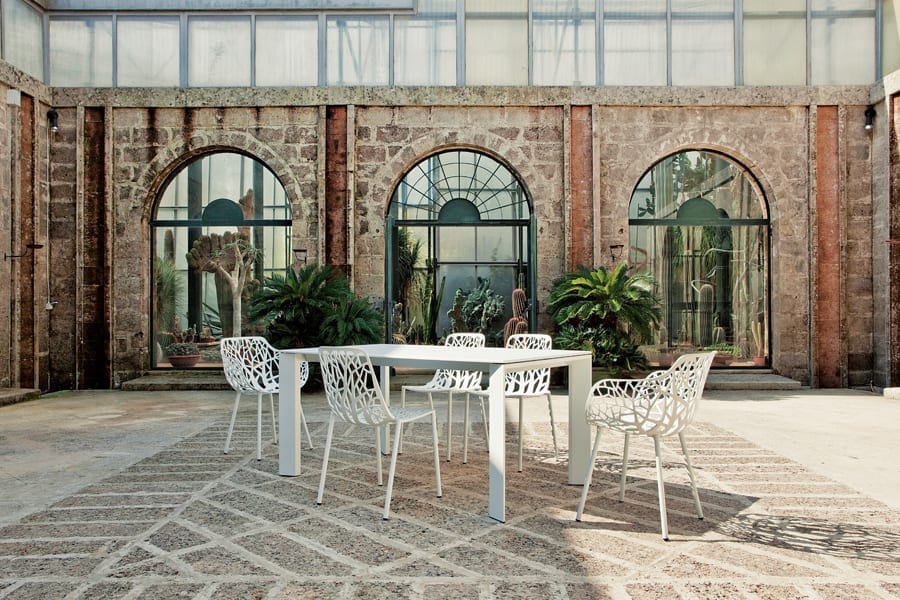
What should I consider when selecting covers for my garden furniture?
When selecting covers for your garden furniture, there are several factors to consider to ensure proper protection and longevity of your outdoor furniture. Here are some key considerations:
1. Size and Fit:
Choose covers that are specifically designed to fit your furniture pieces. Measure the dimensions of your furniture, including width, depth, and height, and select covers that match those measurements. A well-fitting cover will provide better protection and prevent damage from exposure to the elements.
2. Material and Durability:
Opt for covers made from durable and weather-resistant materials. Common options include polyester, vinyl, and specialized outdoor fabrics. These materials should be waterproof, UV-resistant, and able to withstand varying weather conditions. Look for covers with reinforced seams and strong fastening mechanisms for added durability.
3. Breathability:
Consider covers that offer breathability to prevent the buildup of moisture and condensation. Breathable covers allow air circulation, which helps prevent mold, mildew, and rust from forming on your furniture.
4. Easy Installation and Removal:
Choose covers that are easy to install and remove. Look for covers with elastic hems, drawstrings, or fastening straps that provide a secure and snug fit. Covers that are easy to put on and take off make it more convenient to protect and uncover your furniture as needed.
5. Ventilation and Airflow:
Ensure that the covers have vents or mesh panels to allow for proper airflow. Ventilation helps prevent the buildup of heat and moisture, which can lead to condensation and potential damage to your furniture.
6. Style and Aesthetics:
If aesthetics are important to you, consider covers that complement the overall look and style of your outdoor space. Some covers come in a variety of colors and designs, allowing you to choose options that blend well with your garden decor.
7. Storage and Portability:
Keep in mind the storage and portability of the covers when they are not in use. Look for covers that are easy to fold or roll up for compact storage. Additionally, consider covers that come with their own storage bags or cases for convenience.
8. Brand and Reviews:
Research and choose reputable brands known for producing high-quality covers. Read customer reviews and ratings to get insights into the performance and durability of the covers you are considering.
By considering these factors, you can select covers that provide effective protection for your garden furniture, keeping it safe from rain, sun, dirt, and other outdoor elements. Properly covering your furniture when not in use helps prolong its lifespan and reduces the need for extensive cleaning and maintenance.
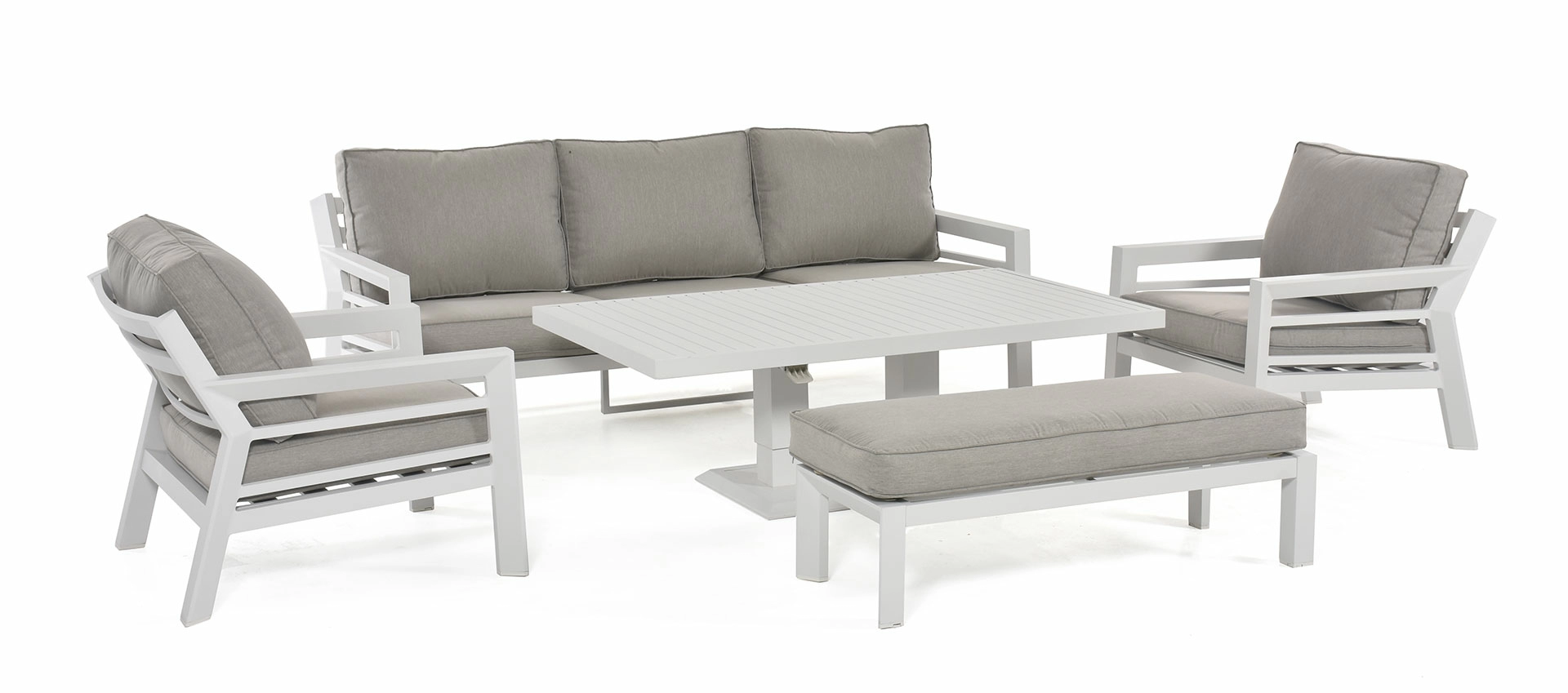
How do I prevent garden furniture from sinking into soft ground or soil?
If you have garden furniture that tends to sink into soft ground or soil, there are several methods you can use to prevent this from happening. Here are some effective ways to keep your garden furniture stable on soft ground:
1. Use Furniture Foot Pads:
One simple solution is to attach foot pads or glides to the bottom of the furniture legs. These pads distribute the weight over a larger surface area, reducing the likelihood of sinking. There are various types of foot pads available, including rubber, plastic, or metal options. Make sure to choose foot pads that are suitable for outdoor use and can withstand moisture and uneven terrain.
2. Install Furniture Leg Bases:
Another option is to install leg bases or platforms underneath the furniture legs. These bases provide a wider surface area for the legs to rest on, reducing the risk of sinking. Leg bases can be made from materials such as plastic, wood, or metal. Ensure that the bases are securely attached to the furniture legs to provide stability.
3. Use Furniture Anchors:
Furniture anchors are devices designed to secure outdoor furniture to the ground. They are particularly useful for larger or heavier furniture pieces. Anchors typically consist of stakes or screws that are driven into the ground and attached to the furniture frame or legs using straps or cables. These anchors help prevent furniture from tipping over or sinking into soft ground.
4. Place a Solid Base:
If you have a specific area in your garden where you frequently place your furniture, consider creating a solid base for it. This can be done by installing a patio or deck made from materials like concrete, stone, or wood. A solid base provides a stable and level surface for your furniture, preventing sinking or tilting. Additionally, it offers a defined seating area and enhances the overall aesthetics of your outdoor space.
5. Use Furniture Pavers or Tiles:
Another option is to place furniture pavers or tiles underneath the furniture legs. These flat and stable surfaces help distribute the weight and prevent sinking. Pavers or tiles made from materials like concrete, stone, or rubber can be placed directly on the ground or on a layer of gravel or sand for added stability.
6. Regularly Inspect and Adjust:
It’s important to regularly inspect your garden furniture and adjust its position as needed. Over time, the ground may shift or become softer due to weather conditions. By monitoring the stability of your furniture and making necessary adjustments, you can prevent sinking and ensure its longevity.
Implementing these preventive measures will help keep your garden furniture stable and secure, even on soft ground or soil. Choose the method that best suits your furniture and the specific conditions of your outdoor space.
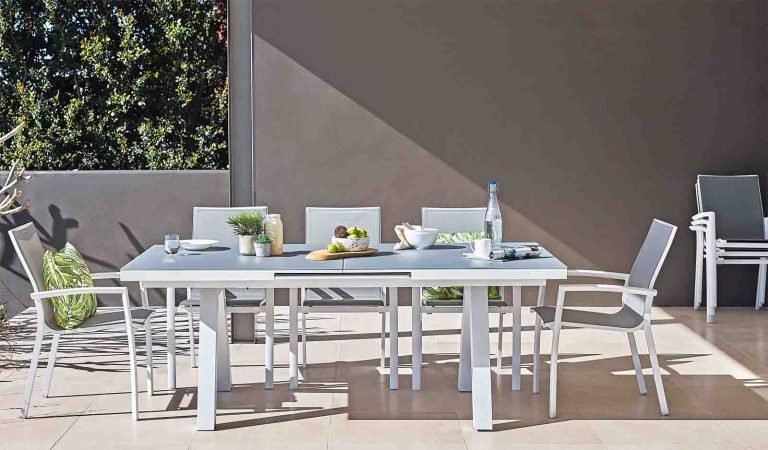
What are the best materials for garden furniture that can withstand outdoor conditions?
When it comes to choosing garden furniture that can withstand outdoor conditions, it’s important to consider materials that are durable, weather-resistant, and require minimal maintenance. Here are some of the best materials for garden furniture:
1. Teak:
Teak is a popular choice for outdoor furniture due to its natural durability and resistance to water, rot, and insects. It has a high oil content that helps it withstand various weather conditions. Teak furniture can last for decades with proper care and maintenance.
2. Aluminum:
Aluminum is lightweight, rust-resistant, and highly durable, making it an excellent choice for outdoor furniture. It is easy to clean and requires minimal maintenance. Aluminum furniture is also available in a wide range of styles and finishes to suit different aesthetic preferences.
3. Wrought Iron:
Wrought iron is known for its strength and durability. It can withstand harsh weather conditions and is resistant to rust and corrosion. Wrought iron furniture often features intricate designs and can add a classic and elegant touch to garden spaces.
4. Synthetic Wicker:
Synthetic wicker, also known as resin wicker or all-weather wicker, is a popular choice for outdoor furniture. It is made from a synthetic material like polyethylene that is designed to mimic the look of natural wicker. Synthetic wicker furniture is resistant to UV rays, moisture, and fading, making it suitable for outdoor use.
5. Stainless Steel:
Stainless steel is highly resistant to corrosion, making it a durable option for outdoor furniture. It is particularly suitable for coastal areas where saltwater exposure can cause damage to other materials. Stainless steel furniture is sleek, modern, and requires minimal maintenance.
6. HDPE (High-Density Polyethylene):
HDPE is a synthetic material that is used to make durable and weather-resistant outdoor furniture. It is resistant to moisture, rot, and insects. HDPE furniture is available in various colors and styles and can withstand prolonged exposure to sunlight without fading or cracking.
7. Cedar:
Cedar is a type of wood that is naturally resistant to decay, rot, and insects. It has a pleasant aroma and is known for its durability. Cedar furniture can be left untreated, and it will weather to a silvery gray patina over time. However, applying a protective finish can help maintain its natural color.
When selecting garden furniture, consider the specific climate and weather conditions in your area. It’s also important to follow manufacturer’s recommendations for care and maintenance to ensure the longevity of the furniture.
editor by CX 2023-12-04
China supplier Outdoor Furniture CHINAMFG Courtyard Web Celebrity Leisure Outdoor Garden Villa Is Prevented Bask in The Balcony vacuum pump booster
Product Description
HangZhou Zixuan Furniture Co., Ltd. is a factory specializing in the production of outdoor furniture. It has nearly 20 years of experience in the production of outdoor furniture. There are some experienced teachers in the factory. They are very professional and have guaranteed quality. We can customize them. If you have pictures, we can produce them. Welcome to contact us. We are very confident that we can make your order. Welcome to inquire! Price gives you very affordable price and guaranteed quality products!
| Material: | Metal |
|---|---|
| Style: | Simple |
| Usage: | Bar, Hotel, Dining Room, Outdoor |
| Samples: |
US$ 280/Piece
1 Piece(Min.Order) | Order Sample Can customize colors
|
|---|
| Customization: |
Available
|
|
|---|
.shipping-cost-tm .tm-status-off{background: none;padding:0;color: #1470cc}
|
Shipping Cost:
Estimated freight per unit. |
about shipping cost and estimated delivery time. |
|---|
| Payment Method: |
|
|---|---|
|
Initial Payment Full Payment |
| Currency: | US$ |
|---|
| Return&refunds: | You can apply for a refund up to 30 days after receipt of the products. |
|---|
Can I find budget-friendly aluminum furniture parts without compromising quality?
Yes, it is possible to find budget-friendly aluminum furniture parts without compromising quality. Here is a detailed explanation:
When shopping for aluminum furniture parts on a budget, it’s important to consider a few factors that can help you find high-quality options at affordable prices:
- 1. Research and Compare:
- 2. Material Quality:
- 3. Consider Off-Season Sales and Clearance:
- 4. Evaluate Design Simplicity:
- 5. Check for Warranty or Guarantees:
- 6. Consider DIY or Upcycling:
Take the time to research and compare different suppliers, manufacturers, and retailers. Look for companies that specialize in aluminum furniture parts and offer a range of options to suit various budgets. Compare prices, materials, and customer reviews to ensure you’re getting the best value for your money.
While aluminum itself is a durable material, the quality of the aluminum used in furniture parts can vary. Look for furniture parts made from high-quality aluminum alloys that are known for their strength and corrosion resistance. Ensure that the aluminum has undergone proper treatments or finishes to enhance its durability and longevity.
Keep an eye out for off-season sales, promotions, and clearance events. Many retailers offer discounts on furniture parts during certain times of the year or when new stock is coming in. By taking advantage of these opportunities, you may be able to find budget-friendly aluminum furniture parts without compromising quality.
Consider opting for aluminum furniture parts with simpler designs. Intricate or elaborate designs may require more production time, labor, and materials, which can increase the price. Choosing simpler designs can help keep costs down while still maintaining quality.
Look for furniture parts that come with a warranty or guarantee from the manufacturer. A warranty can provide reassurance that the product has been built to a certain standard of quality. It also offers protection in case of any manufacturing defects or premature failures.
If you’re open to a creative approach, consider DIY projects or upcycling existing aluminum furniture parts. You can often find used aluminum furniture pieces at lower prices and give them a new life by refinishing, repainting, or repurposing them. This way, you can achieve budget-friendly options while adding your personal touch to the design.
By considering these factors and employing some smart strategies, you can find budget-friendly aluminum furniture parts without compromising quality. Remember to prioritize the quality of the materials, research and compare options, and take advantage of sales or clearance events. With careful planning and a little creativity, you can create a stylish and durable furniture arrangement without breaking the bank.
What are the benefits of using powder-coated aluminum for furniture parts?
Using powder-coated aluminum for furniture parts offers several benefits. Here is a detailed explanation:
1. Enhanced Durability: Powder coating is a highly durable finish that creates a protective layer on the surface of aluminum parts. This coating helps to resist scratches, chips, and corrosion, extending the lifespan of the furniture parts. The durability of powder-coated aluminum makes it suitable for both indoor and outdoor furniture, as it can withstand various environmental conditions.
2. Wide Range of Colors and Finishes: Powder coating provides a wide variety of color options and finishes for aluminum furniture parts. The powder coating process involves the application of dry powder to the aluminum surface, which is then cured under heat. This allows for a vast selection of colors, including metallic, glossy, matte, and textured finishes. The ability to choose from different colors and finishes gives you the flexibility to match your furniture parts to your desired aesthetic and design scheme.
3. Uniform and Consistent Appearance: Powder coating results in a smooth and even finish on the aluminum parts. The powder is electrostatically applied to the surface, ensuring uniform coverage and consistent color distribution. This creates a visually appealing and professional-looking appearance for the furniture parts. The consistency of the coating also helps to hide any minor imperfections or blemishes on the aluminum surface.
4. Chemical and UV Resistance: Powder-coated aluminum is resistant to chemicals, making it more resistant to stains, discoloration, and fading. It also provides protection against UV rays, preventing the color of the furniture parts from fading or deteriorating when exposed to sunlight. This resistance to chemicals and UV rays helps to maintain the original appearance and color of the furniture parts over time.
5. Easy Maintenance: Powder-coated aluminum furniture parts are relatively easy to maintain. The smooth and non-porous surface created by the powder coating process makes it resistant to dirt, dust, and stains. Regular cleaning with mild soap and water is usually sufficient to keep the parts looking clean and fresh. Additionally, the durability of powder coating means that the furniture parts are less likely to require frequent touch-ups or refinishing.
6. Environmental Friendliness: Powder coating is an environmentally friendly finishing option for aluminum furniture parts. Unlike traditional liquid paints, powder coating does not contain harmful solvents or volatile organic compounds (VOCs). The powder coating process produces minimal waste, as any excess powder can be collected and reused. Additionally, powder-coated aluminum parts are recyclable, contributing to sustainability efforts.
By using powder-coated aluminum for furniture parts, you can benefit from enhanced durability, a wide range of colors and finishes, a uniform appearance, resistance to chemicals and UV rays, easy maintenance, and environmental friendliness. These advantages make powder-coated aluminum an excellent choice for creating attractive, long-lasting, and low-maintenance furniture pieces.
What are the advantages of using lightweight aluminum parts for furniture?
Using lightweight aluminum parts for furniture offers several advantages. Here is a detailed explanation of the benefits of utilizing lightweight aluminum parts in furniture construction:
- 1. Ease of Handling and Transport:
- 2. Versatility in Design:
- 3. Durability:
- 4. Energy Efficiency:
- 5. Environmentally Friendly:
- 6. Resistance to Insects and Moisture:
Aluminum is a lightweight material, making furniture with aluminum parts easier to handle and transport. Compared to furniture made from heavier materials, aluminum furniture is often more portable and can be moved around with greater convenience. This is particularly beneficial for outdoor furniture or furniture that needs to be frequently rearranged.
The lightweight nature of aluminum allows for greater design versatility. Aluminum furniture parts can be easily shaped, bent, or extruded into various profiles and forms. This flexibility in design enables the creation of furniture with unique shapes, curves, and intricate details that may not be achievable with other materials. It opens up possibilities for innovative and contemporary furniture designs.
Despite being lightweight, aluminum is a durable and robust material. It offers good resistance to corrosion, making it suitable for both indoor and outdoor furniture. Aluminum furniture parts are less prone to rust or degradation over time, ensuring longevity and reducing the need for frequent maintenance.
Aluminum is an energy-efficient material. Its lightweight nature requires less energy for transportation and handling compared to furniture made from heavier materials. Additionally, aluminum has excellent thermal conductivity, which means it can quickly absorb and dissipate heat. This property contributes to energy efficiency in furniture by minimizing heat buildup and reducing the need for additional insulation.
Aluminum is a highly recyclable material. Using lightweight aluminum parts in furniture contributes to environmental sustainability. Aluminum can be recycled repeatedly without losing its properties, reducing the demand for virgin materials and minimizing waste. Additionally, the energy required for recycling aluminum is considerably lower compared to the production of new aluminum, resulting in reduced carbon emissions.
Aluminum is naturally resistant to insects, pests, and moisture. Unlike wood, which can be susceptible to rot or termite damage, aluminum furniture parts are not prone to these issues. This makes aluminum a suitable choice for outdoor furniture or furniture placed in humid environments.
These advantages make lightweight aluminum parts an attractive option for furniture construction. The combination of ease of handling, design versatility, durability, energy efficiency, environmental friendliness, and resistance to insects and moisture makes aluminum an ideal material for various types of furniture, including indoor and outdoor pieces.
editor by CX 2023-12-04
China Good quality 7.5kw 10HP 8bar 10bar 13bar Painting Screw Air Compressor Machine air compressor portable
Product Description
| SPECIFICATION | ||||||||
| Model |
Pressure MPa |
Flow rate m³/min |
Power Kw/HP |
Noise dB(A) |
Cooling capacity T/H |
Oiling L |
Outlet Dia G |
Weight Kg |
|
BW-8WA BW-8WW |
0.8 | 1.05 | 7.5/10 | 57 | 2 | 10 | 3/4 | 360 |
| 1.0 | 0.8 | |||||||
|
BW-11WA BW-11WW |
0.8 | 1.72 | 11/15 | 60 | 2.5 | 26 | 1 | 420 |
| 1.0 | 1.42 | |||||||
|
BW-15WA BW-15WW |
0.8 | 2.25 | 15/20 | 60 | 3.5 | 26 | 1 | 520 |
| 1.0 | 1.92 | |||||||
|
BW-18WA BW-18WW |
0.8 | 3.0 | 18.5/25 | 63 | 4 | 30 | 1 | 670 |
| 1.1 | 2.2 | |||||||
|
BW-22WA BW-22WW |
0.8 | 3.65 | 22/30 | 63 | 5 | 30 | 1 | 690 |
| 1.0 | 3.0 | |||||||
|
BW-30WA BW-30WW |
0.8 | 5.0 | 30/40 | 66 | 7 | 40 | 11/2 | 840 |
| 1.0 | 3.9 | |||||||
|
BW-37WA BW-37WW |
0.8 | 6.3 | 37/50 | 66 | 9 | 40 | 11/2 | 960 |
| 1.0 | 5.33 | |||||||
|
BW-45WA BW-45WW |
0.8 | 7.8 | 45/60 | 68 | 10 | 90 | 11/2 | 1080 |
| 1.0 | 6.3 | |||||||
|
BW-55WA BW-55WW |
0.8 | 10.1 | 55/75 | 69 | 12 | 100 | 11/2 | 1180 |
| 1.0 | 7.9 | |||||||
1,Are you manufacturer?
BW: Yes, we are professional air compressor manufacturer over 15 years and our factory is located in ZheJiang .
2,How long is your air compressor warranty?
BW: Air end for 2 years,other for 1 year.
3,Do you provide After- sales service parts?
BW: Of course, We could provide easy- consumable spares.
4,How long could your air compressor be used?
BW: Generally, more than 20 years.
5,How about your price?
BW: Based on high quality, Our price is very competitive in this market all over the world.
6,How about your customer service?
BW: For email, we could reply our customers’ emails within 2 hours.
7,Do you support OEM?
BW: YES, and we also provide multiple models to select. How to get quicker quotation?When you send us inquiry, please confirm
Below information at the same time:
* What is the air displacement (m3/min,cfm/min)?
* What is the air pressure (mpa,bar,psi)?
* What is the voltage in your factory (v/p/Hz)?
* It is ok if you need air tank, air dryer and filters.
This information is helpful for us to check suitable equipment solution and quotation quickly
| After-sales Service: | 1 Year |
|---|---|
| Warranty: | 1 Year |
| Lubrication Style: | Oil-free |
| Cooling System: | Air Cooling |
| Power Source: | AC Power |
| Cylinder Position: | Vertical |
| Customization: |
Available
|
|
|---|
.webp)
What are the advantages of using an air compressor in construction?
Using an air compressor in construction offers numerous advantages that contribute to increased efficiency, productivity, and versatility. Here are some key benefits of using air compressors in construction:
- Powering Pneumatic Tools: Air compressors are commonly used to power a wide range of pneumatic tools on construction sites. Tools such as jackhammers, nail guns, impact wrenches, drills, and sanders can be operated using compressed air. Pneumatic tools are often preferred due to their lightweight, compact design and ability to deliver high torque or impact force.
- Efficient Operation: Air compressors provide a continuous and reliable source of power for pneumatic tools, allowing for uninterrupted operation without the need for frequent battery changes or recharging. This helps to maintain a smooth workflow and reduces downtime.
- Portability: Many construction air compressors are designed to be portable, featuring wheels or handles for easy maneuverability on job sites. Portable air compressors can be transported to different areas of the construction site as needed, providing power wherever it is required.
- Versatility: Air compressors are versatile tools that can be used for various applications in construction. Apart from powering pneumatic tools, they can also be utilized for tasks such as inflating tires, cleaning debris, operating air-operated pumps, and powering air horns.
- Increased Productivity: The efficient operation and power output of air compressors enable construction workers to complete tasks more quickly and effectively. Pneumatic tools powered by air compressors often offer higher performance and faster operation compared to their electric or manual counterparts.
- Cost Savings: Air compressors can contribute to cost savings in construction projects. Pneumatic tools powered by air compressors are generally more durable and have longer lifespans compared to electric tools. Additionally, since air compressors use compressed air as their power source, they do not require the purchase or disposal of batteries or fuel, reducing ongoing operational expenses.
- Reduced Electrocution Risk: Construction sites can be hazardous environments, with the risk of electrocution from electrical tools or equipment. By utilizing air compressors and pneumatic tools, the reliance on electrical power is minimized, reducing the risk of electrocution accidents.
It is important to select the appropriate air compressor for construction applications based on factors such as required air pressure, volume, portability, and durability. Regular maintenance, including proper lubrication and cleaning, is crucial to ensure the optimal performance and longevity of air compressors in construction settings.
In summary, the advantages of using air compressors in construction include powering pneumatic tools, efficient operation, portability, versatility, increased productivity, cost savings, and reduced electrocution risk, making them valuable assets on construction sites.
.webp)
How does the horsepower of an air compressor affect its capabilities?
The horsepower of an air compressor is a crucial factor that directly impacts its capabilities and performance. Here’s a closer look at how the horsepower rating affects an air compressor:
Power Output:
The horsepower rating of an air compressor indicates its power output or the rate at which it can perform work. Generally, a higher horsepower rating translates to a greater power output, allowing the air compressor to deliver more compressed air per unit of time. This increased power output enables the compressor to operate pneumatic tools and equipment that require higher air pressure or greater airflow.
Air Pressure:
The horsepower of an air compressor is directly related to the air pressure it can generate. Air compressors with higher horsepower ratings have the capacity to produce higher air pressures. This is particularly important when operating tools or machinery that require specific air pressure levels to function optimally. For example, heavy-duty pneumatic tools like jackhammers or impact wrenches may require higher air pressure to deliver the necessary force.
Air Volume:
In addition to air pressure, the horsepower of an air compressor also affects the air volume or airflow it can provide. Higher horsepower compressors can deliver greater volumes of compressed air, measured in cubic feet per minute (CFM). This increased airflow is beneficial when using pneumatic tools that require a continuous supply of compressed air, such as paint sprayers or sandblasters.
Duty Cycle:
The horsepower rating of an air compressor can also influence its duty cycle. The duty cycle refers to the amount of time an air compressor can operate continuously before it needs to rest and cool down. Higher horsepower compressors often have larger and more robust components, allowing them to handle heavier workloads and operate for longer periods without overheating. This is particularly important in demanding applications where continuous and uninterrupted operation is required.
Size and Portability:
It’s worth noting that the horsepower rating can also affect the physical size and portability of an air compressor. Higher horsepower compressors tend to be larger and heavier due to the need for more substantial motors and components to generate the increased power output. This can impact the ease of transportation and maneuverability, especially in portable or mobile applications.
When selecting an air compressor, it is essential to consider the specific requirements of your intended applications. Factors such as desired air pressure, airflow, duty cycle, and portability should be taken into account. It’s important to choose an air compressor with a horsepower rating that aligns with the demands of the tools and equipment you plan to operate, ensuring optimal performance and efficiency.
Consulting the manufacturer’s specifications and guidelines can provide valuable information on how the horsepower rating of an air compressor corresponds to its capabilities and suitability for different tasks.
.webp)
What is the role of air compressor tanks?
Air compressor tanks, also known as receiver tanks or air receivers, play a crucial role in the operation of air compressor systems. They serve several important functions:
1. Storage and Pressure Regulation: The primary role of an air compressor tank is to store compressed air. As the compressor pumps air into the tank, it accumulates and pressurizes the air. The tank acts as a reservoir, allowing the compressor to operate intermittently while providing a steady supply of compressed air during periods of high demand. It helps regulate and stabilize the pressure in the system, reducing pressure fluctuations and ensuring a consistent supply of air.
2. Condensation and Moisture Separation: Compressed air contains moisture, which can condense as the air cools down inside the tank. Air compressor tanks are equipped with moisture separators or drain valves to collect and remove this condensed moisture. The tank provides a space for the moisture to settle, allowing it to be drained out periodically. This helps prevent moisture-related issues such as corrosion, contamination, and damage to downstream equipment.
3. Heat Dissipation: During compression, air temperature increases. The air compressor tank provides a larger surface area for the compressed air to cool down and dissipate heat. This helps prevent overheating of the compressor and ensures efficient operation.
4. Pressure Surge Mitigation: Air compressor tanks act as buffers to absorb pressure surges or pulsations that may occur during compressor operation. These surges can be caused by variations in demand, sudden changes in airflow, or the cyclic nature of reciprocating compressors. The tank absorbs these pressure fluctuations, reducing stress on the compressor and other components, and providing a more stable and consistent supply of compressed air.
5. Energy Efficiency: Air compressor tanks contribute to energy efficiency by reducing the need for the compressor to run continuously. The compressor can fill the tank during periods of low demand and then shut off when the desired pressure is reached. This allows the compressor to operate in shorter cycles, reducing energy consumption and minimizing wear and tear on the compressor motor.
6. Emergency Air Supply: In the event of a power outage or compressor failure, the stored compressed air in the tank can serve as an emergency air supply. This can provide temporary air for critical operations, allowing time for maintenance or repairs to be carried out without disrupting the overall workflow.
Overall, air compressor tanks provide storage, pressure regulation, moisture separation, heat dissipation, pressure surge mitigation, energy efficiency, and emergency backup capabilities. They are vital components that enhance the performance, reliability, and longevity of air compressor systems in various industrial, commercial, and personal applications.


editor by CX 2023-12-02
China best Zw-2.4/3-6 Piston Air Compressor Small Piston Natural Gas Compressor a Complete Range of Models Including Z-Type, V-Type, D-Type, M-Type, etc air compressor for sale
Product Description
Product Application
Mainly used for pressurized transmission of natural gas into the pipeline network (Natural pipeline gas extraction and combustible gas recovery tank filling)
It can also be used for stirring in the pharmaceutical and brewing industries, pressurized gas transportation in the chemical industry, blow molding bottle making in the food industry, and dust removal of parts in the machine manufacturing industry.
Product Features
1. This series of compressors is an advanced piston compressor unit produced and manufactured using the product technology of Mannes Mandermarg Company in Germany.
2. The product has the characteristics of low noise, low vibration, compact structure, smooth operation, safety and reliability, and high automation level. It can also be configured with a data-driven remote display and control system according to customer requirements.
3. Equipped with alarm and shutdown functions for low oil pressure, low water pressure, high temperature, low inlet pressure, and high exhaust pressure of the compressor, making the operation of the compressor more reliable.
Structure Introduction
The unit consists of a compressor host, electric motor, coupling, flywheel, pipeline system, cooling system, electrical equipment, and auxiliary equipment.
| NO. | MODEL | Compressed medium | Flow rate Nm³/h |
Inlet pressure MPa |
Outlet pressure MPa |
Rotating speed r/min |
Motor power KW |
Cooling mode | Overall dimension mm |
Weight Kg |
| 1 | DW-14/(0-0.2)-25 | Raw gas | 800 | 0-0.02 | 2.5 | 740 | 160 | Water cooled | 4800*3200*1915 | ~10000 |
| 2 | VW-8/18 | Vinylidene fluoride gas | 418 | Atmospheric pressure | 1.8 | 980 | 75 | Water cooled | 3700*2000*1700 | ~4500 |
| 3 | VWD-3.2/(0-0.2)-40 | Biogas | 230 | 0-0.2 | 4.0 | 740 | 45 | Water cooled | 6000*2500*2650 | ~8000 |
| 4 | VW-9/6 | Ethyl chloride gas | 470 | Atmospheric pressure | 0.6 | 980 | 55 | Water cooled | 2800*1720*1700 | ~3500 |
| 5 | DWF-12.4/(9-12)-14 | Carbon dioxide | 6400 | 0.9-1.2 | 1.4 | 740 | 185 | Air cooled | 6000*2700*2200 | ~10000 |
| 6 | VWF-2.86/5-16 | Nitrogen gas | 895 | 0.5 | 1.6 | 740 | 55 | Air cooled | 3200*2200*1750 | ~3500 |
| 7 | DW-2.4/(18-25)-50 | Raw gas | 2900 | 1.8-2.5 | 5.0 | 980 | 160 | Water cooled | 4300*3000*1540 | ~4500 |
| 8 | VW-5.6/(0-6)-6 | Isobutylene gas | 1650 | 0-0.6 | 0.6 | 740 | 45 | Water cooled | 2900X1900X1600 | ~3500 |
| 9 | VW-3.8/3.5 | Mixed gas | 200 | Atmospheric pressure | 0.35 | 980 | 18.5 | Water cooled | 2200*1945*1600 | ~2000 |
| 10 | ZW-1.7/3.5 | Vinyl chloride gas | 100 | Atmospheric pressure | 0.35 | 740 | 15 | Water cooled | 2700X1600X2068 | ~2000 |
| 11 | ZWF-0.96/5 | Hydrogen chloride gas | 55 | Atmospheric pressure | 0.5 | 740 | 11 | Air cooled | 2000*1500*2000 | ~1000 |
| 12 | VW-0.85/(0-14)-40 | Refrigerant gas | 300 | 0-1.4 | 4.0 | 740 | 55 | Water cooled | 4500*2300*1780 | ~5500 |
| 13 | DW-3.78/(8-13)-(16-24) | Ammonia gas | 2700 | 0.8-1.3 | 1.6-2.4 | 740 | 75 | Water cooled | 3200*2000*1700 | ~3500 |
Related products
| Warranty: | 12 Months |
|---|---|
| Lubrication Style: | Customized |
| Cooling System: | Air/Water /Mixed Cooling |
| Cylinder Arrangement: | Balanced Opposed Arrangement |
| Cylinder Position: | Customized |
| Structure Type: | Open Type |
| Customization: |
Available
|
|
|---|
.webp)
How are air compressors utilized in the aerospace industry?
Air compressors play a crucial role in various applications within the aerospace industry. They are utilized for a wide range of tasks that require compressed air or gas. Here are some key uses of air compressors in the aerospace industry:
1. Aircraft Systems:
Air compressors are used in aircraft systems to provide compressed air for various functions. They supply compressed air for pneumatic systems, such as landing gear operation, braking systems, wing flap control, and flight control surfaces. Compressed air is also utilized for starting aircraft engines and for cabin pressurization and air conditioning systems.
2. Ground Support Equipment:
Air compressors are employed in ground support equipment used in the aerospace industry. They provide compressed air for tasks such as inflating aircraft tires, operating pneumatic tools for maintenance and repair, and powering air-driven systems for fueling, lubrication, and hydraulic operations.
3. Component Testing:
Air compressors are utilized in component testing within the aerospace industry. They supply compressed air for testing and calibrating various aircraft components, such as valves, actuators, pressure sensors, pneumatic switches, and control systems. Compressed air is used to simulate operating conditions and evaluate the performance and reliability of these components.
4. Airborne Systems:
In certain aircraft, air compressors are employed for specific airborne systems. For example, in military aircraft, air compressors are used for air-to-air refueling systems, where compressed air is utilized to transfer fuel between aircraft in mid-air. Compressed air is also employed in aircraft de-icing systems, where it is used to inflate inflatable de-icing boots on the wing surfaces to remove ice accumulation during flight.
5. Environmental Control Systems:
Air compressors play a critical role in the environmental control systems of aircraft. They supply compressed air for air conditioning, ventilation, and pressurization systems, ensuring a comfortable and controlled environment inside the aircraft cabin. Compressed air is used to cool and circulate air, maintain desired cabin pressure, and control humidity levels.
6. Engine Testing:
In the aerospace industry, air compressors are utilized for engine testing purposes. They provide compressed air for engine test cells, where aircraft engines are tested for performance, efficiency, and durability. Compressed air is used to simulate different operating conditions and loads on the engine, allowing engineers to assess its performance and make necessary adjustments or improvements.
7. Oxygen Systems:
In aircraft, air compressors are involved in the production of medical-grade oxygen for onboard oxygen systems. Compressed air is passed through molecular sieve beds or other oxygen concentrator systems to separate oxygen from other components of air. The generated oxygen is then supplied to the onboard oxygen systems, ensuring a sufficient and continuous supply of breathable oxygen for passengers and crew at high altitudes.
It is important to note that air compressors used in the aerospace industry must meet stringent quality and safety standards. They need to be reliable, efficient, and capable of operating under demanding conditions to ensure the safety and performance of aircraft systems.
.webp)
What is the role of air compressors in manufacturing and industrial processes?
Air compressors play a crucial role in various manufacturing and industrial processes, providing a reliable source of compressed air that powers a wide range of equipment and tools. Here are some key roles of air compressors in manufacturing and industrial settings:
1. Pneumatic Tools and Equipment:
Air compressors power a wide range of pneumatic tools and equipment used in manufacturing processes. These tools include impact wrenches, air drills, sanders, grinders, nail guns, and spray guns. Compressed air provides the necessary force and energy for these tools, enabling efficient and precise operations.
2. Automation and Control Systems:
Compressed air is used in automation and control systems within manufacturing facilities. Pneumatic actuators and valves use compressed air to control the movement of machinery and components. These systems are widely used in assembly lines, packaging operations, and material handling processes.
3. Air Blowing and Cleaning:
Compressed air is employed for blowing and cleaning applications in manufacturing and industrial processes. Air blowguns and air nozzles are used to remove debris, dust, and contaminants from surfaces, machinery, and products. Compressed air is also used for drying, cooling, and purging operations.
4. Air Separation and Gas Generation:
Air compressors are used in air separation plants to generate industrial gases such as nitrogen, oxygen, and argon. These gases are essential for various industrial processes, including metal fabrication, chemical production, and food packaging.
5. HVAC Systems:
Compressed air is utilized in heating, ventilation, and air conditioning (HVAC) systems. It powers pneumatic actuators for damper control, pneumatic controls for pressure regulation, and pneumatic valves for flow control in HVAC applications.
6. Air Compression for Storage and Transport:
Compressed air is used for storage and transport purposes in manufacturing and industrial settings. It is often used to pressurize storage tanks or containers that hold gases or liquids. Compressed air also facilitates the transfer of materials through pipelines and pneumatic conveying systems.
7. Process Instrumentation:
Compressed air is utilized in process instrumentation and control systems. It powers pneumatic instruments such as pressure gauges, flow meters, and control valves. These instruments play a critical role in monitoring and regulating various parameters in industrial processes.
8. Material Handling and Pneumatic Conveying:
In manufacturing and industrial facilities, compressed air is used for material handling and pneumatic conveying systems. It enables the movement of bulk materials such as powders, granules, and pellets through pipelines, facilitating efficient and controlled material transfer.
Overall, air compressors are vital components in manufacturing and industrial processes, providing a versatile and efficient source of power for a wide range of applications. The specific role of air compressors may vary depending on the industry, process requirements, and operational needs.
.webp)
Are there portable air compressors available for home use?
Yes, there are portable air compressors specifically designed for home use. These portable models offer convenience, versatility, and ease of use for various tasks around the house. Here are some key points about portable air compressors for home use:
1. Compact and Lightweight: Portable air compressors are typically compact and lightweight, making them easy to transport and store. They are designed with portability in mind, allowing homeowners to move them around the house or take them to different locations as needed.
2. Electric-Powered: Most portable air compressors for home use are electric-powered. They can be plugged into a standard household electrical outlet, eliminating the need for gasoline or other fuel sources. This makes them suitable for indoor use without concerns about emissions or ventilation.
3. Versatile Applications: Portable air compressors can be used for a wide range of home applications. They are commonly used for inflating tires, sports equipment, and inflatable toys. They are also handy for operating pneumatic tools such as nail guns, staplers, and paint sprayers. Additionally, portable air compressors can be used for cleaning tasks, powering airbrushes, and other light-duty tasks around the house.
4. Pressure and Capacity: Portable air compressors for home use typically have lower pressure and capacity ratings compared to larger industrial or commercial models. They are designed to meet the needs of common household tasks rather than heavy-duty applications. The pressure and capacity of these compressors are usually sufficient for most home users.
5. Oil-Free Operation: Many portable air compressors for home use feature oil-free operation. This means they do not require regular oil changes or maintenance, making them more user-friendly and hassle-free for homeowners.
6. Noise Level: Portable air compressors designed for home use often prioritize low noise levels. They are engineered to operate quietly, reducing noise disturbances in residential environments.
7. Cost: Portable air compressors for home use are generally more affordable compared to larger, industrial-grade compressors. They offer a cost-effective solution for homeowners who require occasional or light-duty compressed air applications.
When considering a portable air compressor for home use, it’s important to assess your specific needs and tasks. Determine the required pressure, capacity, and features that align with your intended applications. Additionally, consider factors such as portability, noise level, and budget to choose a suitable model that meets your requirements.
Overall, portable air compressors provide a practical and accessible compressed air solution for homeowners, allowing them to tackle a variety of tasks efficiently and conveniently within a home setting.
editor by CX 2023-12-02
China Hot selling High Quality Suspension System Car Air Compressor Pump for CHINAMFG Auto Car Parts air compressor oil
Product Description
Air Suspension Compressor Atuo Spare Parts Valve Block For CHINAMFG X351 AW933B484AF
1. OE quality and CHINAMFG price Company Profile HangZhou Xihu (West Lake) Dis. Xihu (West Lake) Dis. Auto Parts Manufacturing Co., Ltd.,The company mainly engaged inautomotive chassis components, engine accessories,spray series products. The company provide design, research and development,production, sales, for the domestic and foreign automotive assembly plant and the global after-sales market to provide high quality automotive parts. The company now provides supporting services for Mercedes Benz,Audi,BMW,Volkswagen,Por-sche,Land Rover,Bentley,Jaguaretc. Through brand positioning, the company provides high-quality original parts and cost-effective post-market brand parts for the global automotive sector.Now, it has set up agents and distributors in more than 35 countries around the world,XIHU (WEST LAKE) DIS. brand is the first batch of manufacturers approved by the Chinese ministry of commerce tomeet the export requirements.The company through the stable quality, the reliable prestigeand the customer first principle obtains the customer’s support.
What We Do FAQ Re: Our Trade Office In Xihu (West Lake) Dis. District ,HangZhou; Our Factory Located At Xihu (West Lake) Dis. District HangZhou City. We Warmly Welcome You To Visit With Us Anytime, More Details & Info Please Contact Us About Us XIHU (WEST LAKE) DIS. Brand, is a leading profeesional air suspension and chassis auto part company which specializing in developing, producing and exporting air suspension strut, air spring, air compressor, suspension repair parts, rubber sleeve, aluminum cover, power steering rack and so on. Our products can be installed in cars, trucks, trails, buses, and also compoatible with passenger cars and industrial products. We can provide more than 10,000 kind of products which fit for Mercedes-Benz, Audi, BMW, Land Rover, Porsch,etc. We always offer high quality products and best service so that we not only have a very large market percnetage in domestic maket but also keeping a steady growth in the global market. We export to North America, Europe, Middle East, Africa and Southest Asia, which included 90 countires and regions. Company Culture: Company philosophy: take it from the society and serve the society Service: 1.Quality Warranty: according to the clients’ request, we could guarantee fron 12 month to 24 months. Advantage 1. we are top 3 of professional air suspension manufacturer in China. OEM/ODM Service: – If you want to show your own brand LOGO on the goods such as cable, package bag, label or any where. Our OEM and ODM service is always ready to do it. Please contact with our sales team to get best support. Packing: Shipping:
| Order Sample | .shipping-cost-tm .tm-status-off{background: none;padding:0;color: #1470cc} Estimated freight per unit. Stationary and portable air compressors are two common types of air compressors with distinct features and applications. Here are the key differences between them: 1. Mobility: The primary difference between stationary and portable air compressors is their mobility. Stationary air compressors are designed to be permanently installed in a fixed location, such as a workshop or a factory. They are typically larger, heavier, and not easily movable. On the other hand, portable air compressors are smaller, lighter, and equipped with handles or wheels for easy transportation. They can be moved from one location to another, making them suitable for jobsites, construction sites, and other mobile applications. 2. Power Source: Another difference lies in the power source used by stationary and portable air compressors. Stationary compressors are usually powered by electricity, as they are designed for continuous operation in a fixed location with access to power outlets. They are connected to the electrical grid or have dedicated wiring. In contrast, portable compressors are available in various power options, including electric, gasoline, and diesel engines. This versatility allows them to operate in remote areas or sites without readily available electricity. 3. Tank Capacity: Tank capacity is also a distinguishing factor between stationary and portable air compressors. Stationary compressors often have larger storage tanks to store compressed air for extended periods. The larger tanks enable them to deliver a continuous and steady supply of compressed air for longer durations without the need for frequent cycling. Portable compressors, due to their compact size and portability, generally have smaller tank capacities, which may be sufficient for intermittent or smaller-scale applications. 4. Performance and Output: The performance and output capabilities of stationary and portable air compressors can vary. Stationary compressors are typically designed for high-volume applications that require a consistent and continuous supply of compressed air. They often have higher horsepower ratings, larger motor sizes, and higher air delivery capacities. Portable compressors, while generally offering lower horsepower and air delivery compared to their stationary counterparts, are still capable of delivering sufficient air for a range of applications, including pneumatic tools, inflation tasks, and light-duty air-powered equipment. 5. Noise Level: Noise level is an important consideration when comparing stationary and portable air compressors. Stationary compressors, being larger and built for industrial or commercial settings, are often equipped with noise-reducing features such as sound insulation and vibration dampening. They are designed to operate at lower noise levels, which is crucial for maintaining a comfortable working environment. Portable compressors, while efforts are made to reduce noise, may produce higher noise levels due to their compact size and portability. 6. Price and Cost: Stationary and portable air compressors also differ in terms of price and cost. Stationary compressors are generally more expensive due to their larger size, higher power output, and industrial-grade construction. They often require professional installation and may involve additional costs such as electrical wiring and system setup. Portable compressors, being smaller and more versatile, tend to have a lower upfront cost. They are suitable for individual users, contractors, and small businesses with budget constraints or flexible air supply needs. When selecting between stationary and portable air compressors, it is essential to consider the specific requirements of the intended application, such as mobility, power source availability, air demands, and noise considerations. Understanding these differences will help in choosing the appropriate type of air compressor for the intended use. Maintaining proper air quality in compressed air systems is essential to ensure the reliability and performance of pneumatic equipment and the safety of downstream processes. Here are some key steps to maintain air quality: 1. Air Filtration: Install appropriate air filters in the compressed air system to remove contaminants such as dust, dirt, oil, and water. Filters are typically placed at various points in the system, including the compressor intake, aftercoolers, and before point-of-use applications. Regularly inspect and replace filters to ensure their effectiveness. 2. Moisture Control: Excessive moisture in compressed air can cause corrosion, equipment malfunction, and compromised product quality. Use moisture separators or dryers to remove moisture from the compressed air. Refrigerated dryers, desiccant dryers, or membrane dryers are commonly employed to achieve the desired level of dryness. 3. Oil Removal: If the compressed air system utilizes oil-lubricated compressors, it is essential to incorporate proper oil removal mechanisms. This can include coalescing filters or adsorption filters to remove oil aerosols and vapors from the air. Oil-free compressors eliminate the need for oil removal. 4. Regular Maintenance: Perform routine maintenance on the compressed air system, including inspections, cleaning, and servicing of equipment. This helps identify and address any potential issues that may affect air quality, such as leaks, clogged filters, or malfunctioning dryers. 5. Air Receiver Tank Maintenance: Regularly drain and clean the air receiver tank to remove accumulated contaminants, including water and debris. Proper maintenance of the tank helps prevent contamination from being introduced into the compressed air system. 6. Air Quality Testing: Periodically test the quality of the compressed air using appropriate instruments and methods. This can include measuring particle concentration, oil content, dew point, and microbial contamination. Air quality testing provides valuable information about the effectiveness of the filtration and drying processes and helps ensure compliance with industry standards. 7. Education and Training: Educate personnel working with compressed air systems about the importance of air quality and the proper procedures for maintaining it. Provide training on the use and maintenance of filtration and drying equipment, as well as awareness of potential contaminants and their impact on downstream processes. 8. Documentation and Record-Keeping: Maintain accurate records of maintenance activities, including filter replacements, drying system performance, and air quality test results. Documentation helps track the system’s performance over time and provides a reference for troubleshooting or compliance purposes. By implementing these practices, compressed air systems can maintain proper air quality, minimize equipment damage, and ensure the integrity of processes that rely on compressed air. An air compressor works by using mechanical energy to compress and pressurize air, which is then stored and used for various applications. Here’s a detailed explanation of how an air compressor operates: 1. Air Intake: The air compressor draws in ambient air through an intake valve or filter. The air may pass through a series of filters to remove contaminants such as dust, dirt, and moisture, ensuring the compressed air is clean and suitable for its intended use. 2. Compression: The intake air enters a compression chamber, typically consisting of one or more pistons or a rotating screw mechanism. As the piston moves or the screw rotates, the volume of the compression chamber decreases, causing the air to be compressed. This compression process increases the pressure and reduces the volume of the air. 3. Pressure Build-Up: The compressed air is discharged into a storage tank or receiver where it is held at a high pressure. The tank allows the compressed air to be stored for later use and helps to maintain a consistent supply of compressed air, even during periods of high demand. 4. Pressure Regulation: Air compressors often have a pressure regulator that controls the output pressure of the compressed air. This allows the user to adjust the pressure according to the requirements of the specific application. The pressure regulator ensures that the compressed air is delivered at the desired pressure level. 5. Release and Use: When compressed air is needed, it is released from the storage tank or receiver through an outlet valve or connection. The compressed air can then be directed to the desired application, such as pneumatic tools, air-operated machinery, or other pneumatic systems. 6. Continued Operation: The air compressor continues to operate as long as there is a demand for compressed air. When the pressure in the storage tank drops below a certain level, the compressor automatically starts again to replenish the compressed air supply. Additionally, air compressors may include various components such as pressure gauges, safety valves, lubrication systems, and cooling mechanisms to ensure efficient and reliable operation. In summary, an air compressor works by drawing in air, compressing it to increase its pressure, storing the compressed air, regulating the output pressure, and releasing it for use in various applications. This process allows for the generation of a continuous supply of compressed air for a wide range of industrial, commercial, and personal uses.
2. Fatigue Testing more than 6,054, A230325713 230325718 230325718 230325713
W251
A25132571 251320571 251320571 251325713 25132 164325713 16432
W220(4 Matic)
AA2203257138
W220
2203205013
W221(4 Matic)
A221320571 A221320571
W221
A22132 0571 3 A221325713
W211
AA211325713 211325713 211325718 211325718 21132 0571 3 21132 0571 8 21132 0571 3
Air Suspension Shock Absorber
F02
37126791676
E66(with ADS)
37126785536
E65 E66
37126785538
E53 X5
37116761444
Air Shock Absorber
L322
RNB40E 3D0616 970343571 970343 0571 4
Company purpose: people-oriented, customer first, integrity first! Company philosophy:mutual benefit and common developmentl Company direction: develop quality products,adhere to the brand strategy.Trust and integrity are the cornerstones of our long-lastingrelationships and is essential in fostering loyalty and teamwork. We care about our people,our customers,suppliers and communities and about creating a sustainable future together.
We develop and source great consumer products that consumers love to buy. We outperform our competition by bringing products to market faster and at higher value for our customers.Our unique production and sourcing process enables us to work very differently than buyingoffices and traditional trading companies, giving more responsibility and freedom to ouremployees.
1. Are You Manufacturer Or Trading Company?
Re: We Are Both Specialize In Auto Parts ( Air Suspension) Manufacturer & Trading Company.
2. What’s The MOQ?
Re: The MOQ With Our Standard Products Is 1 Piece.
3. What’s Your Mainly Products?
Re: We Supply Air Suspension Spring, Shock Absorber, Pressure Shocks, Air Pump etc.
4. What’s Your Policy On Warranty?
Re: We Provide 12 Months For New Suspension Parts Products For Our Customers.
5. Where Is Your Company?
6. What Are Your Payment Methods?
Re: We Accept T/T, Paypal, Western Union, Money Gram, Alipay. Due To Difference Payment In Difference Countries Or Regions.
7. What’s Your Packing Way?
Re: Neutral Packing, Standard Packing, Accept Customers’ Special Required.
8. How Do You Usually Ship The Goods And When?
Re: Normally, We Will Ship The Goods In 3-7 Days After Payment Verified And Goods Confirmed, And Ship The Goods Via The (HuangPu) Ports In GuangZhou.
9. If You Offer The Free Sample?
Re: We Accept MOQ 1 Piece Order, But Do Not Offer The Free Sample To Our Customers.
Development philosophy: dedicated to air spring technology research, build international top air suspension products
Company spirit: honesty, innovation, harmony and CHINAMFG development
2.Delivery time: within 7 days after getting your payments. Regarding the big orders, it need about 15-30 days.
according to our stocck and product task.
3.Quick response: We will reply to our clients within 24 hour and try our best to meet the clients request.
4.Good Service: Be Honest Forever.However you buy 1 pcs order or you buy more than 1000 pcs, we will sincerely reply to every client.
2. our factory has 120 staff, and we only produce 100% newly air suspension products for 10 years.
3. we have cooperated with 80 overseas companies with stable relationships. many are also brands or big sellers at Amazon or EBAY websites.
4. we have our own cars to test our products,except normal test machine and IATF16949:2016 certificate standard.
5. we have complete production line, Mercedes Benz,BMW Audi,Porsches,Land Rover,Volkswagen-these are our products,we has complete products line.
6. Our air suspension/air compressor/air strut/air suspension parts 100% NEWLY manufactured to instead OEM
7. We manufacture air suspension/air strut/air compressor to instead OEM ;
8. Constant temperature workshop for core parts;
9. Japan automatic welding machine to weld
– According to Standard Export Packing.
– Carton box, wooden box, wooden pallet.
– International express such as UPS, TNT, DHL, etc
– International air: CA, AA, EA, etc
– By sea
– Standard export sea port: Xihu (West Lake) Dis., Hongkong, Xihu (West Lake) Dis.
– Standard export airport: HangZhou, Hongkong, HangZhou
After-sales Service:
12 Month
Warranty:
12 Month
Material:
Stainless Steel
Samples:
1 Piece(Min.Order)
Customization:
Shipping Cost:
about shipping cost and estimated delivery time.
Payment Method:
Initial Payment
Full Payment
Currency:
US$
Return&refunds:
You can apply for a refund up to 30 days after receipt of the products.
.webp)
What are the differences between stationary and portable air compressors?
.webp)
How do you maintain proper air quality in compressed air systems?
.webp)
How does an air compressor work?
editor by CX 2023-12-02
China manufacturer 2BV Series CHINAMFG Stainless Steel Liquid Ring Vacuum Pump Water Ring Vacuum Pump and Air Compressor for Paper Making Chemical Industry with Good quality
Product Description
Product Description
The 2BV series water ring vacuum pumps and compressor is mainly used for sucking gases and water vapor,Particularly suitable for pumping pollution-free gas and steam (special gas needs to be specified when ordering), and the suction pressure can reach 33mbar absolute pressure (97% vacuum degree). When the water ring vacuum pump works for a long time when the suction pressure is close to the limit vacuum (saturated vapor pressure of working fluid), it is necessary to connect with the cavitation resistant pipe in order to get rid of the screaming and protect the pump.
In conjunction with ZheJiang University, China University of petroleum and other units, our company has continuously optimized its products and launched 2BV series water ring vacuum pumps. With its excellent performance and many advantages, our company has become a new generation of energy-saving products and will comprehensively replace SK, 2SK series water ring vacuum pumps and W, WY, WL and other reciprocating vacuum pumps with the same energy.
Our Advantages
1.The direct connection design of the motor saves space, is easy to install and maintain.
2.All adopt mechanical seal as standard configuration.
3.It is equipped with a cavitation protection pipe interface. If it works for a long time under the limit pressure, it will automatically open the cavitation protection pipe interface, which can maximize the suction effect and eliminate the cavitation sound, and effectively protect the vacuum pump.
4.The whole series is equipped with stainless steel impeller, which improves the corrosion resistance of the vacuum pump.
5.The unique flexible exhaust port design will not produce over compression, ensuring the best efficiency of the vacuum pump within its performance range.
Typical Use
——Oil and gas recovery. ——Biological medicine ——Food Processing —— Single crystal furnace
——Vacuum forming ——Vacuum flame refining ——Electronic photovoltaic. ——Semiconductor synthesis
Product Parameters
| Type | Maximum air volume m3/min |
Pressure limit Pa |
power kW | revolution rpm | Motor explosion-proof grad | Water consumption L/min |
noise dB(A) | weight kg |
| 2BV2060-EX | 0.45 | 3300 | 1.1 | 2880 | d II BT4 | 2 | 62 | 39 |
| 2BV2061-EX | 0.87 | 3300 | 1.5 | 2880 | d II BT4 | 2 | 65 | 45 |
| 2BV2070-EX | 1.33 | 3300 | 2.2 | 2880 | d II BT4 | 2.5 | 66 | 66 |
| 2BV2071-EX | 1.83 | 3300 | 3 | 2880 | d II BT4 | 4.2 | 72 | 77 |
| 2BV6110 | 2.75 | 3300 | 4 | 1450 | d II BT4 | 7 | 63 | 153 |
| 2BV6111 | 3.83 | 3300 | 5.5 | 1450 | d II BT4 | 8.5 | 68 | 208 |
| 2BV6121 | 4.68 | 3300 | 7.5 | 1450 | d II BT4 | 10 | 69 | 240 |
| 2BV6131 | 6.68 | 3300 | 11 | 1450 | d II BT4 | 15 | 73 | 320 |
| 2BV6161 | 8.3 | 3300 | 15 | 970 | d II BT4 | 20 | 74 | 446 |
Detailed Photos
Water ring pump
High efficiency roots + water ring vacuum pump unit
High efficiency roots + water ring vacuum pump unit
Vacuum pump is used in the field of chemical plant
General Manager Speech
Deeply cultivate the vacuum technology, and research,develop and manufacture the vacuum equipment to provide the best solution in the vacuum field and make the vacuum application easier.
Company Profile
ZheJiang Kaien Vacuum Technology Co., Ltd. is a high-tech enterprise integrating R & D, production and operation of vacuum equipment. The company has strong technical force, excellent equipment and considerate after-sales service. The product manufacturing process is managed in strict accordance with IS09001 quality system. It mainly produces and sells screw vacuum pump, roots pump, claw vacuum pump, runoff vacuum pump, scroll pump, water ring vacuum pump, vacuum unit and other vacuum systems.
New plant plHangZhou
The company’s products have been for a number of food, medicine, refrigeration, drying plants and a number of transformer related equipment manufacturers for vacuum equipment. The products are widely used in vacuum drying and dehydration, kerosene vapor phase drying, vacuum impregnation, vacuum metallurgy, vacuum coating, vacuum evaporation, vacuum concentration, oil and gas recovery, etc.
High precision machining equipment
The company cooperates with many scientific research institutions and universities, such as ZheJiang University, China University of petroleum, ZheJiang Institute of mechanical design, etc.with colleges and universities to research and develop core technologies, and owns dozens of independent intellectual property patents.Our technology is leading, the product quality is stable, the product has a good reputation in China’s domestic market, is sold all over the country, and is exported to Europe, America, Africa, the Middle East and Southeast Asia,We adhering to the basic tenet of quality, reputation and service, the company takes leading-edge technology of vacuum pump as its own responsibility, and wholeheartedly serves customers of vacuum equipment application in various industries with rigorous working attitude and professional working style.
Product quality wins consumer cooperationIn shipment ISO 9001 High tech enterprise certificate
Welcome to send your needs, we will provide you with the best service,
provide the greatest help!!!
| Warranty: | One Year |
|---|---|
| Oil or Not: | Oil Free |
| Structure: | Water Ring |
| Exhauster Method: | Entrapment Vacuum Pump |
| Vacuum Degree: | High Vacuum |
| Work Function: | Mainsuction Pump |
| Customization: |
Available
|
|
|---|
.webp)
What are the energy-saving technologies available for air compressors?
There are several energy-saving technologies available for air compressors that help improve their efficiency and reduce energy consumption. These technologies aim to optimize the operation of air compressors and minimize energy losses. Here are some common energy-saving technologies used:
1. Variable Speed Drive (VSD) Compressors:
VSD compressors are designed to adjust the motor speed according to the compressed air demand. By varying the motor speed, these compressors can match the output to the actual air requirement, resulting in energy savings. VSD compressors are particularly effective in applications with varying air demands, as they can operate at lower speeds during periods of lower demand, reducing energy consumption.
2. Energy-Efficient Motors:
The use of energy-efficient motors in air compressors can contribute to energy savings. High-efficiency motors, such as those with premium efficiency ratings, are designed to minimize energy losses and operate more efficiently than standard motors. By using energy-efficient motors, air compressors can reduce energy consumption and achieve higher overall system efficiency.
3. Heat Recovery Systems:
Air compressors generate a significant amount of heat during operation. Heat recovery systems capture and utilize this wasted heat for other purposes, such as space heating, water heating, or preheating process air or water. By recovering and utilizing the heat, air compressors can provide additional energy savings and improve overall system efficiency.
4. Air Receiver Tanks:
Air receiver tanks are used to store compressed air and provide a buffer during periods of fluctuating demand. By using appropriately sized air receiver tanks, the compressed air system can operate more efficiently. The tanks help reduce the number of starts and stops of the air compressor, allowing it to run at full load for longer periods, which is more energy-efficient than frequent cycling.
5. System Control and Automation:
Implementing advanced control and automation systems can optimize the operation of air compressors. These systems monitor and adjust the compressed air system based on demand, ensuring that only the required amount of air is produced. By maintaining optimal system pressure, minimizing leaks, and reducing unnecessary air production, control and automation systems help achieve energy savings.
6. Leak Detection and Repair:
Air leaks in compressed air systems can lead to significant energy losses. Regular leak detection and repair programs help identify and fix air leaks promptly. By minimizing air leakage, the demand on the air compressor is reduced, resulting in energy savings. Utilizing ultrasonic leak detection devices can help locate and repair leaks more efficiently.
7. System Optimization and Maintenance:
Proper system optimization and routine maintenance are essential for energy savings in air compressors. This includes regular cleaning and replacement of air filters, optimizing air pressure settings, ensuring proper lubrication, and conducting preventive maintenance to keep the system running at peak efficiency.
By implementing these energy-saving technologies and practices, air compressor systems can achieve significant energy efficiency improvements, reduce operational costs, and minimize environmental impact.
.webp)
How do you troubleshoot common air compressor problems?
Troubleshooting common air compressor problems can help identify and resolve issues that may affect the performance and functionality of the compressor. Here are some steps to troubleshoot common air compressor problems:
1. No Power:
- Check the power source and ensure the compressor is properly plugged in.
- Inspect the circuit breaker or fuse box to ensure it hasn’t tripped or blown.
- Verify that the compressor’s power switch or control panel is turned on.
2. Low Air Pressure:
- Check the air pressure gauge on the compressor. If the pressure is below the desired level, the compressor might not be building up enough pressure.
- Inspect for air leaks in the system. Leaks can cause a drop in pressure. Listen for hissing sounds or use a soapy water solution to identify the location of leaks.
- Ensure the compressor’s intake filter is clean and not clogged, as this can restrict airflow and reduce pressure.
3. Excessive Noise or Vibration:
- Inspect the compressor’s mounting and foundation to ensure it is secure and stable. Loose mounts can cause excessive noise and vibration.
- Check for loose or damaged components, such as belts, pulleys, or motor mounts. Tighten or replace as necessary.
- Verify that the compressor’s cooling system, such as the fan or fins, is clean and free from obstructions. Overheating can lead to increased noise and vibration.
4. Air Leaks:
- Inspect all connections, valves, fittings, and hoses for leaks. Tighten or replace any loose or damaged components.
- Apply a soapy water solution to suspected areas and look for bubbles. Bubbles indicate air leaks.
- Consider using thread sealant or Teflon tape on threaded connections to ensure a proper seal.
5. Excessive Moisture in Compressed Air:
- Check the compressor’s drain valve and ensure it is functioning properly. Open the valve to release any accumulated moisture.
- Inspect and clean the compressor’s moisture separator or air dryer, if equipped.
- Consider installing additional filtration or drying equipment to remove moisture from the compressed air system.
6. Motor Overheating:
- Ensure the compressor’s cooling system is clean and unobstructed.
- Check the motor’s air intake vents and clean any dust or debris that may be blocking airflow.
- Verify that the compressor is not being operated in an excessively hot environment.
- Check the motor’s lubrication levels and ensure they are within the manufacturer’s recommended range.
- Consider using a thermal overload protector to prevent the motor from overheating.
If troubleshooting these common problems does not resolve the issue, it may be necessary to consult the manufacturer’s manual or seek assistance from a qualified technician. Regular maintenance, such as cleaning, lubrication, and inspection, can also help prevent common problems and ensure the optimal performance of the air compressor.
Can air compressors be used for automotive applications?
Yes, air compressors can be used for various automotive applications and are commonly found in automotive repair shops, garages, and even in some vehicles. Here are some automotive applications where air compressors are frequently utilized:
1. Tire Inflation: Air compressors are commonly used to inflate tires in automotive applications. They provide a convenient and efficient way to inflate tires to the recommended pressure, ensuring optimal tire performance, fuel efficiency, and safety.
2. Air Tools: Air compressors power a wide range of pneumatic tools used in automotive repair and maintenance. These tools include impact wrenches, ratchet wrenches, air hammers, pneumatic drills, and sanders. Air-powered tools are favored for their high torque and power-to-weight ratio, making them suitable for heavy-duty automotive tasks.
3. Spray Painting: Air compressors are commonly used in automotive painting applications. They power airbrushes and spray guns that are used to apply paint, primer, and clear coats. Air compressors provide the necessary air pressure to atomize the paint and deliver a smooth and even finish.
4. Brake System Maintenance: Air compressors play a crucial role in maintaining and diagnosing automotive brake systems. They are used to pressurize the brake lines, allowing for proper bleeding of the system and detection of leaks or faults.
5. Suspension Systems: Some automotive suspension systems, such as air suspensions, rely on air compressors to maintain the desired air pressure in the suspension components. The compressor inflates or deflates the suspension as needed to provide a comfortable ride and optimal handling.
6. Cleaning and Dusting: Air compressors are used for cleaning automotive parts, blowing away dust and debris, and drying surfaces. They provide a high-pressure stream of air that effectively cleans hard-to-reach areas.
7. Air Conditioning Systems: Air compressors are a key component in automotive air conditioning systems. They compress and circulate refrigerant, allowing the system to cool and dehumidify the air inside the vehicle.
When using air compressors for automotive applications, it’s important to consider the specific requirements of the task at hand. Ensure that the air compressor has the necessary pressure and capacity to meet the demands of the application. Additionally, use appropriate air hoses, fittings, and tools that are compatible with the compressor’s output.
Overall, air compressors are versatile and valuable tools in the automotive industry, providing efficient power sources for a wide range of applications, from tire inflation to powering pneumatic tools and supporting various automotive systems.
editor by CX 2023-12-02
China Hot selling CHINAMFG 100% Oil-Free Air Compressor with high quality
Product Description
CHINAMFG Oil-free Air Compressor
BROTIE oil-free lubricated air compressors belong to reciprocating, piston, single action and air-cooled portable air compressors, they are designed for the departments which need pure air source and higher environmental requirements. There is no need to add lubricating oil for this product, the exhaust gas does not contain oil and oil vapor and won’t pollute environment, compressed air consuming equipment and its product, therefore, it is an environment-friendly energy-saving product.
1. When it is used as a general power gas source, it is more convenient in use than oil lubricated air compressor and its maintenance cost is lower.
2. As the simplest and optimum equipment which provides high-quality oilless compressed air, it saves complicated oil filtering and treatment equipment, thus saving a lot of equipment expenditure and maintenance cost.
Select a machine type with at least 20% allowance when determining compressed air consumption.
Please take into account the condition that consumption of compressed air may be increased in the future. Correct type selection will reduce purchase and use cost.
For detailed models, please contact with CHINAMFG with no hesitation.
| Model | Capacity (m 3 /min) |
Discharge pressure (Mpa) |
Speed (r/min) |
Noise bd(A) |
Motor Power (KW) |
Size of discharge | Air Container Volume (M3) |
dimensions (L*W*H) |
| ZW-0.1/7 | 0.1 | 0.7 | 980 | ≤ 78 | 1.5(220V) | G1/4″ | 0.04 | 750*350*750 |
| ZW-0.24/7 | 0.24 | 0.24 | 950 | ≤ 81 | 2.2(380V) | G1/2″ | 0.08 | 1140*400*900 |
| ZW-0.3/7 | 0.3 | 0.7 | 950 | ≤ 81 | 2.2(380V) | G1/2″ | 0.08 | 1140*400*900 |
| VW-0.45/7 | 0.45 | 0.7 | 920 | ≤ 83 | 4(380V) | G1/2″ | 0.12 | 1300*460*960 |
| VW-0.6/7 | 0.6 | 0.7 | 950 | ≤ 84 | 5.5(380V) | G1/2″ | 0.12 | 1300*460*960 |
| VW-0.42/10 | 0.42 | 1.0 | 920 | ≤ 84 | 4(380V) | G1/2″ | 0.12 | 1300*460*960 |
| VW-0.5/14 | 0.5 | 1.4 | 670 | ≤ 84 | 5.5(380V) | G1/2″ | 0.18 | 1450*500*1100 |
| WW-0.6/10 | 0.6 | 1.0 | 740 | ≤ 84 | 5.5(380V) | G1/2″ | 0.18 | 1450*500*1100 |
| WW-0.9/7 | 0.9 | 0.7 | 810 | ≤ 84 | 7.5(380V) | G1/2″ | 0.18 | 1450*500*1100 |
| WW-0.9/10 | 0.9 | 1.0 | 810 | ≤ 84 | 7.5(380V) | G1/2″ | 0.18 | 1450*500*1100 |
| WW-0.7/12.5 | 0.7 | 1.25 | 740 | ≤ 84 | 7.5(380V) | G1/2″ | 0.18 | 1450*500*1100 |
| WW-1.25/7 | 1.25 | 0.7 | 860 | ≤ 85 | 11(380V) | G3/4″ | 0.28 | 1600*650*1200 |
| WW-1.25/10 | 1.25 | 1.0 | 770 | ≤ 85 | 11(380V) | G3/4″ | 0.28 | 1600*650*1200 |
| WW-1.6/10 | 1.6 | 1.0 | 820 | ≤ 85 | 15(380V) | G3/4″ | 0.32 | 1660*650*1220 |
| WW-1.8/10 | 1.8 | 1.0 | 900 | ≤ 86 | 15(380V) | G3/4″ | 0.32 | 1660*650*1220 |
| WW-1.2/10 | 1.2 | 1.0 | 740 | ≤ 84 | 5.5*2(380V) | G1″ | 0.30 | 1850*1250*1400 |
| WW-1.8/7 | 1.8 | 0.7 | 810 | ≤ 84 | 7.5*2(380V) | G1″ | 0.30 | 1850*1250*1400 |
| WW-1.8/10 | 1.8 | 1.0 | 810 | ≤ 84 | 7.5*2(380V) | G1″ | 0.30 | 1850*1250*1400 |
| WW-1.4/12.5 | 1.4 | 1.25 | 740 | ≤ 84 | 7.5*2(380V) | G1″ | 0.30 | 1850*1250*1400 |
| WW-2.5/7 | 2.5 | 0.7 | 860 | ≤ 86 | 11*2(380V) | G1″ | 0.30 | 1850*1250*1400 |
| WW-2.5/10 | 2.5 | 1.0 | 770 | ≤ 86 | 11*2(380V) | G1″ | 0.30 | 1850*1250*1400 |
| WW-3.0/7 | 3.0 | 0.7 | 770 | ≤ 86 | 11*2(380V) | G1″ | 0.32 | 1850*1250*1400 |
| WW-3.0/10 | 3.0 | 1.0 | 810 | ≤ 86 | 11*2(380V) | G1″ | 0.32 | 1850*1250*1400 |
| WW-3.2/7 | 3.2 | 0.7 | 820 | ≤ 86 | 15*2(380V) | G1″ | 0.32 | 1900*1500*1500 |
| WW-3.2/10 | 3.2 | 1.0 | 820 | ≤ 86 | 15*2(380V) | G1″ | 0.32 | 1900*1500*1500 |
| WW-3.6/7 | 3.6 | 0.7 | 900 | ≤ 86 | 15*2(380V) | G1″ | 0.32 | 1900*1500*1500 |
| WW-3.6/10 | 3.6 | 1.0 | 900 | ≤ 86 | 15*2(380V) | G1″ | 0.32 | 1900*1500*1500 |
| WW-4.8/10 | 4.8 | 1.0 | 900 | ≤ 86 | 15*2(380V) 11*1(380V) | G3/2″ | / | 2210*1360*1050 |
| Performance: | Low Noise |
|---|---|
| Type: | Piston |
| Drive Mode: | Electric |
| Piston Type: | Closed |
| Configuration: | Portable |
| Power Source: | AC Power |
| Customization: |
Available
|
|
|---|
How are air compressors utilized in the aerospace industry?
Air compressors play a crucial role in various applications within the aerospace industry. They are utilized for a wide range of tasks that require compressed air or gas. Here are some key uses of air compressors in the aerospace industry:
1. Aircraft Systems:
Air compressors are used in aircraft systems to provide compressed air for various functions. They supply compressed air for pneumatic systems, such as landing gear operation, braking systems, wing flap control, and flight control surfaces. Compressed air is also utilized for starting aircraft engines and for cabin pressurization and air conditioning systems.
2. Ground Support Equipment:
Air compressors are employed in ground support equipment used in the aerospace industry. They provide compressed air for tasks such as inflating aircraft tires, operating pneumatic tools for maintenance and repair, and powering air-driven systems for fueling, lubrication, and hydraulic operations.
3. Component Testing:
Air compressors are utilized in component testing within the aerospace industry. They supply compressed air for testing and calibrating various aircraft components, such as valves, actuators, pressure sensors, pneumatic switches, and control systems. Compressed air is used to simulate operating conditions and evaluate the performance and reliability of these components.
4. Airborne Systems:
In certain aircraft, air compressors are employed for specific airborne systems. For example, in military aircraft, air compressors are used for air-to-air refueling systems, where compressed air is utilized to transfer fuel between aircraft in mid-air. Compressed air is also employed in aircraft de-icing systems, where it is used to inflate inflatable de-icing boots on the wing surfaces to remove ice accumulation during flight.
5. Environmental Control Systems:
Air compressors play a critical role in the environmental control systems of aircraft. They supply compressed air for air conditioning, ventilation, and pressurization systems, ensuring a comfortable and controlled environment inside the aircraft cabin. Compressed air is used to cool and circulate air, maintain desired cabin pressure, and control humidity levels.
6. Engine Testing:
In the aerospace industry, air compressors are utilized for engine testing purposes. They provide compressed air for engine test cells, where aircraft engines are tested for performance, efficiency, and durability. Compressed air is used to simulate different operating conditions and loads on the engine, allowing engineers to assess its performance and make necessary adjustments or improvements.
7. Oxygen Systems:
In aircraft, air compressors are involved in the production of medical-grade oxygen for onboard oxygen systems. Compressed air is passed through molecular sieve beds or other oxygen concentrator systems to separate oxygen from other components of air. The generated oxygen is then supplied to the onboard oxygen systems, ensuring a sufficient and continuous supply of breathable oxygen for passengers and crew at high altitudes.
It is important to note that air compressors used in the aerospace industry must meet stringent quality and safety standards. They need to be reliable, efficient, and capable of operating under demanding conditions to ensure the safety and performance of aircraft systems.
What is the energy efficiency of modern air compressors?
The energy efficiency of modern air compressors has significantly improved due to advancements in technology and design. Here’s an in-depth look at the energy efficiency features and factors that contribute to the efficiency of modern air compressors:
Variable Speed Drive (VSD) Technology:
Many modern air compressors utilize Variable Speed Drive (VSD) technology, also known as Variable Frequency Drive (VFD). This technology allows the compressor motor to adjust its speed according to the compressed air demand. By matching the motor speed to the required airflow, VSD compressors can avoid excessive energy consumption during periods of low demand, resulting in significant energy savings compared to fixed-speed compressors.
Air Leakage Reduction:
Air leakage is a common issue in compressed air systems and can lead to substantial energy waste. Modern air compressors often feature improved sealing and advanced control systems to minimize air leaks. By reducing air leakage, the compressor can maintain optimal pressure levels more efficiently, resulting in energy savings.
Efficient Motor Design:
The motor of an air compressor plays a crucial role in its energy efficiency. Modern compressors incorporate high-efficiency electric motors that meet or exceed established energy efficiency standards. These motors are designed to minimize energy losses and operate more efficiently, reducing overall power consumption.
Optimized Control Systems:
Advanced control systems are integrated into modern air compressors to optimize their performance and energy consumption. These control systems monitor various parameters, such as air pressure, temperature, and airflow, and adjust compressor operation accordingly. By precisely controlling the compressor’s output to match the demand, these systems ensure efficient and energy-saving operation.
Air Storage and Distribution:
Efficient air storage and distribution systems are essential for minimizing energy losses in compressed air systems. Modern air compressors often include properly sized and insulated air storage tanks and well-designed piping systems that reduce pressure drops and minimize heat transfer. These measures help to maintain a consistent and efficient supply of compressed air throughout the system, reducing energy waste.
Energy Management and Monitoring:
Some modern air compressors feature energy management and monitoring systems that provide real-time data on energy consumption and performance. These systems allow operators to identify energy inefficiencies, optimize compressor settings, and implement energy-saving practices.
It’s important to note that the energy efficiency of an air compressor also depends on factors such as the specific model, size, and application. Manufacturers often provide energy efficiency ratings or specifications for their compressors, which can help in comparing different models and selecting the most efficient option for a particular application.
Overall, modern air compressors incorporate various energy-saving technologies and design elements to enhance their efficiency. Investing in an energy-efficient air compressor not only reduces operational costs but also contributes to sustainability efforts by minimizing energy consumption and reducing carbon emissions.
What are the different types of air compressors?
There are several different types of air compressors, each with its own unique design and operating principle. Here’s an overview of the most commonly used types:
1. Reciprocating Air Compressors: Reciprocating air compressors, also known as piston compressors, use one or more pistons driven by a crankshaft to compress air. They operate by drawing air into a cylinder, compressing it with the piston’s up-and-down motion, and discharging the compressed air into a storage tank. Reciprocating compressors are known for their high pressure capabilities and are commonly used in industrial applications.
2. Rotary Screw Air Compressors: Rotary screw air compressors utilize two interlocking screws to compress air. As the male and female screws rotate, the air is trapped between them and gradually compressed as it moves along the screw threads. These compressors are known for their continuous duty cycle, high efficiency, and quiet operation. They are widely used in industrial, commercial, and automotive applications.
3. Centrifugal Air Compressors: Centrifugal air compressors rely on the principle of centrifugal force to compress air. They use a high-speed impeller to accelerate the incoming air and then convert the kinetic energy into pressure energy. Centrifugal compressors are commonly used in large-scale industrial applications that require high volumes of compressed air.
4. Rotary Vane Air Compressors: Rotary vane air compressors employ a rotor with sliding vanes that compress the air. As the rotor rotates, the vanes slide in and out of the rotor, creating compression chambers. Air is drawn in, trapped, and compressed as the vanes move. These compressors are compact, reliable, and suitable for small to medium-sized applications.
5. Axial Flow Air Compressors: Axial flow air compressors are primarily used in specialized applications such as aircraft engines and gas turbines. They utilize a series of rotating and stationary blades to compress air in a continuous flow. Axial flow compressors are known for their high flow rates and are designed for applications that require large volumes of compressed air.
6. Scroll Air Compressors: Scroll air compressors consist of two interlocking spirals or scrolls that compress the air. One spiral remains stationary while the other orbits around it, creating a series of expanding and contracting pockets that compress the air. Scroll compressors are compact, reliable, and commonly used in applications where low noise and oil-free air are required, such as medical and dental equipment.
These are just a few examples of the different types of air compressors available. Each type has its own advantages, capabilities, and ideal applications. The choice of air compressor depends on factors such as required pressure, flow rate, duty cycle, noise level, oil-free operation, and specific application requirements.
editor by CX 2023-12-01